“A Great and Promising Format”: Why Zaluzhnyy Praises the JEF and Whether This Alliance Could Replace NATO for Ukraine
/88x88/filters:format(webp)/p/5/70/6511266e5e5822a9f31e393ff56d0705.webp "Yeva Slastnova")
journalist
/2368x/filters:focal(0.81,0.3):format(webp)/p/e/33/e42c7a118287a85dba8bfba78658033e.webp)
A statement by Valeriy Zaluzhnyy, Ukraine's ambassador to the United Kingdom, that Ukraine "will never join" NATO sparked a wave of outrage and debate on social media.
The former Commander-in-Chief of the Armed Forces of Ukraine considers Ukraine’s membership in the Joint Expeditionary Force (JEF) to be an effective mechanism for ensuring security.
"Shelter" investigated what Zaluzhnyy meant and whether the JEF could serve as an alternative to NATO membership for Kyiv.
What did Zaluzhny say about NATO, and why was he criticized?
Zaluzhnyy effectively called Ukraine’s path to NATO membership a dead end. And even though he said this during a closed-door meeting of ambassadors in Kyiv, journalists quickly brought his words to the public’s attention.
I know NATO very well. For about 12 years, I personally worked to ensure we adopted NATO standards, and every year I listened to fairy tales about how we were “about to, about to, about to” join NATO. Unfortunately, we will never join it!
Valeriy Zaluzhnyy former Commander-in-Chief of the Armed Forces of Ukraine, Ukrainian Ambassador to the United Kingdom
Zaluzhnyy believes that the Alliance “is stuck with World War II-era doctrines,” while the Ukrainian Armed Forces have made significant progress. At the same time, the ambassador acknowledged that Kyiv needs the technologies available in NATO member states.
Speaking about security guarantees, Zaluzhnyy called for focusing not on NATO, but on new alliances—in particular, the Joint Expeditionary Force (JEF). He expressed regret that Ukraine has not yet begun working toward joining the JEF, even though its governing bodies still need to be strengthened.
As a former chief of staff, Zaluzhnyy may indeed know a great deal about the Alliance and have doubts about its effectiveness. However, the problem is that Ukraine’s path to NATO is enshrined in its Constitution.
That is precisely why Zaluzhnyy has been accused of making a political statement that contradicts the country’s legislation—and that a sitting ambassador has no right whatsoever to make such public remarks.
Against this backdrop, the Ministry of Foreign Affairs issued an official statement to reiterate that Ukraine’s course toward NATO membership remains unchanged. Foreign Ministry spokesperson Heorhiy Tykhyi emphasized that, as of today, there is no other effective collective security system besides the one based on the Washington Treaty.
Ultimately, Zaluzhnyy clarified his position, stressing that he supports Ukraine’s accession to NATO. However, in his view, the alliance must evolve to address today’s threats.
The ambassador also reiterated that Ukraine needs a new security alliance with a territorial focus in Europe. As an example, he again cited the JEF, calling the alliance “a rather promising organization.”
What is the JEF, and where does Ukraine fit in?
The Joint Expeditionary Force (JEF) is a military alliance founded in 2015 under British leadership (Zaluzhny’s interest in the coalition is understandable, given his diplomatic mission in London).
It comprises nine Northern European countries: Denmark, Estonia, Iceland, Latvia, Lithuania, the Netherlands, Norway, Finland, and Sweden. All JEF member countries are also NATO members.
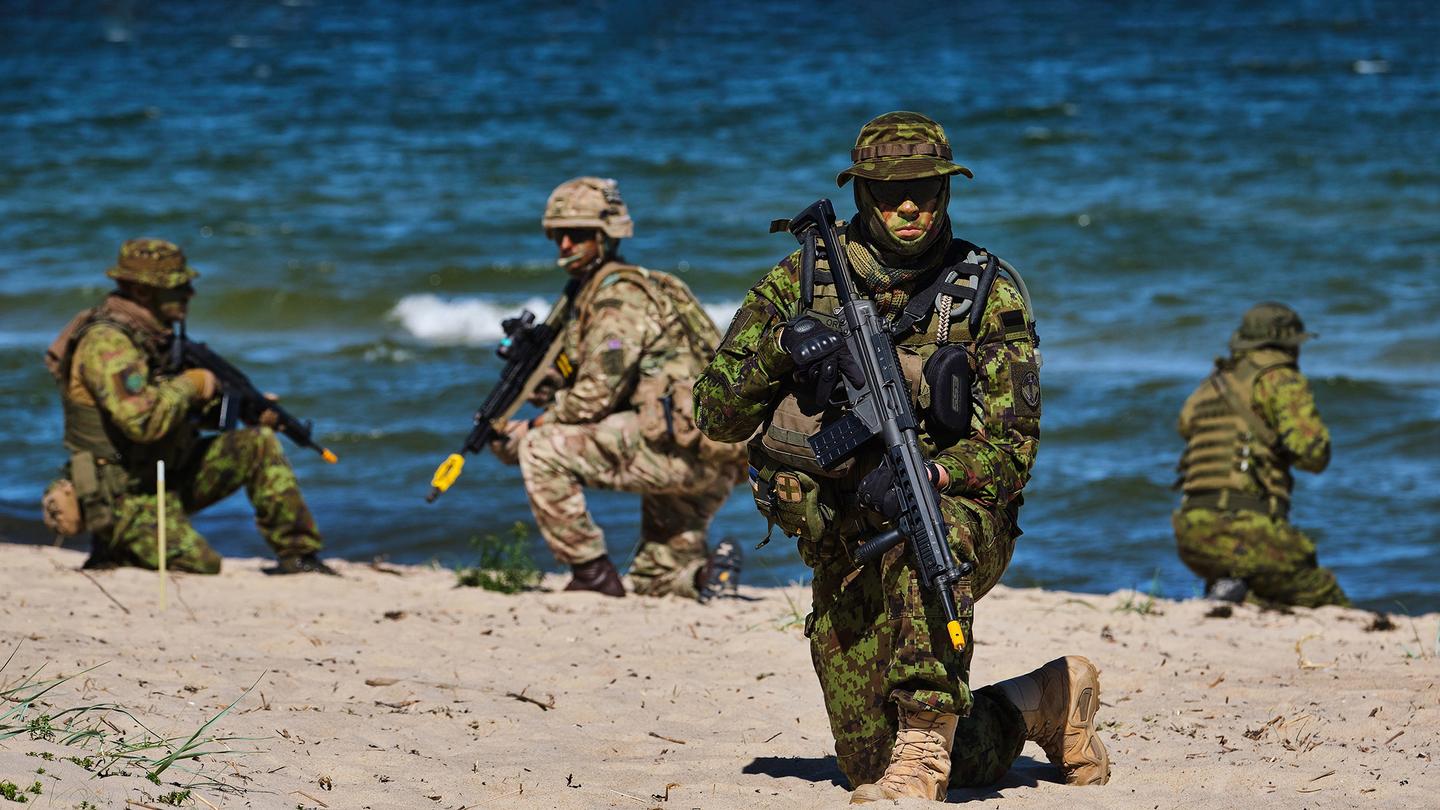
If necessary, JEF forces can deploy more than 10,000 troops for humanitarian missions or high-intensity combat operations. The contingent is capable of operating independently, as well as being deployed to support NATO operations or UN peacekeeping missions.
An important point to note: currently, the JEF does not provide for a collective defense mechanism or mutual security guarantees analogous to Article 5 of the North Atlantic Treaty.
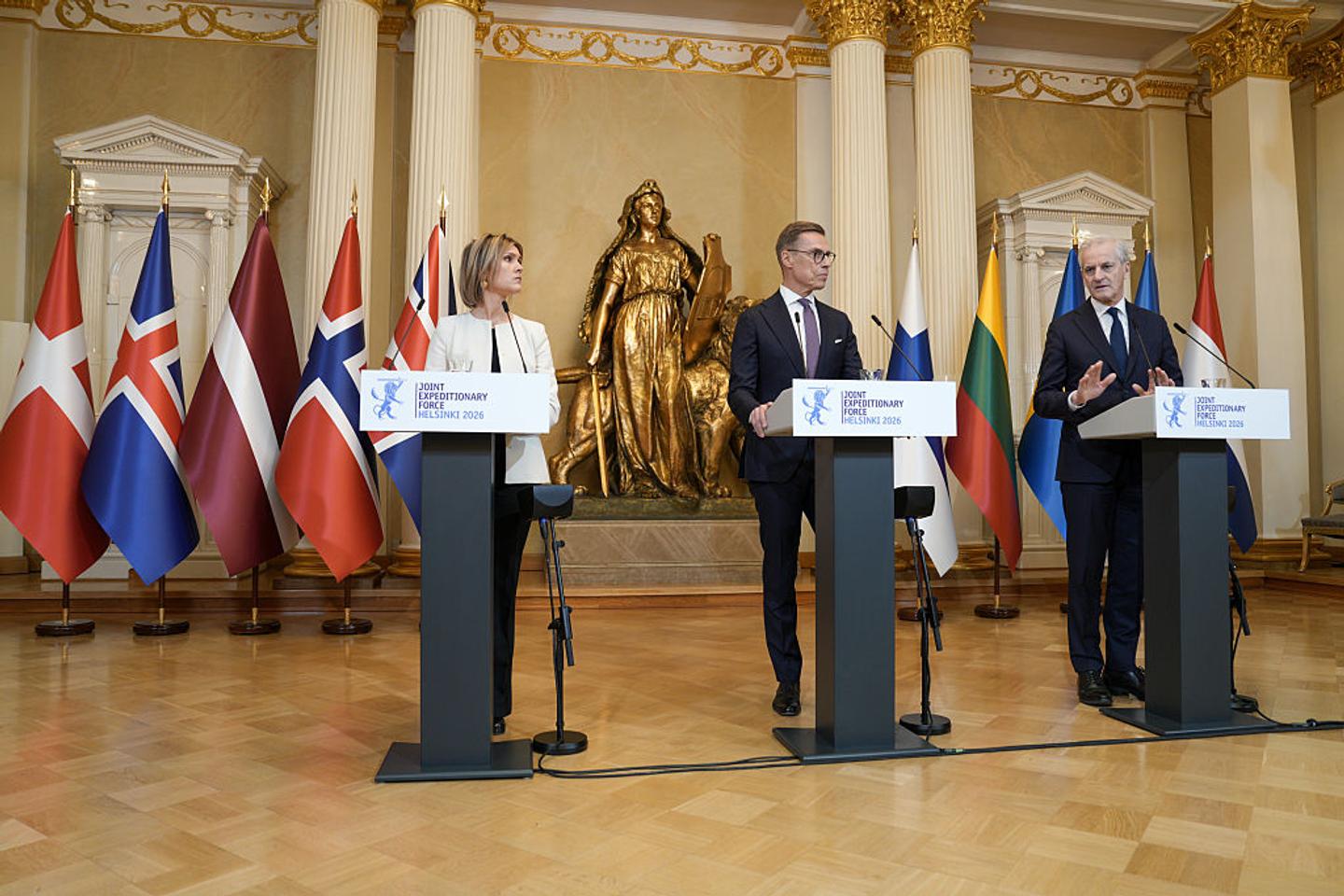
Last fall, Ukraine was granted “Enhanced Partnership” status with the Joint Expeditionary Forces. This was the first time such status was granted to a country that is not a member of the alliance.
Then-Defense Minister Denys Shmyhal stated that Ukraine would share with the JEF its experience in countering hybrid threats, the use of air defense systems and drones, the protection of national infrastructure, and long-range strikes.
Plans also included the participation of the Armed Forces of Ukraine in joint exercises to ensure full interoperability with the coalition’s military forces. In exchange, Ukraine expects its partners to provide access to European technologies and manufacturing capabilities to establish joint weapons production.
The Joint Expeditionary Force itself understands that Russia’s aggression has long since extended beyond Ukraine.
In April of this year, JEF members signed a declaration of intent to create a “multinational naval force” that would serve as a “complement to NATO.” The goal is to deter future Russian threats from the “open maritime border” in the north.
What are the pros and cons of the JEF for Ukraine?
Amid the heated debate surrounding Zaluzhnyy’s remarks, Ukrainian security and foreign policy experts emphasized that the idea of the need to reform NATO is far from new. Three experts interviewed agree that the Alliance, in its current form, requires serious reform, as it is not responding adequately to today’s threats.
Former Foreign Minister Volodymyr Ogryzko noted that NATO as it stands today does not meet the demands of modern warfare. He observed that practical forms of cooperation with the JEF should be of interest to Ukraine, but it is important that these tools be integrated into a new ideology of warfare.
For his part, Oleksandr Khara, director of the Center for Defense Strategies, is convinced that Zaluzhny’s assessment of NATO was precisely his own analysis, not a declaration of rejection of the Constitution.
In his view, the general’s skepticism toward the Alliance is justified, as international relations are governed by a risk-benefit analysis: at present, partners perceive Ukraine as a threat due to the risk of direct confrontation with Russia.
However, Khara believes that for Europeans, Ukraine will remain a threat within NATO only as long as American troops remain in Europe. As soon as the U.S. begins withdrawing its forces, the added value of Ukraine’s experience and military will increase.
The expert called the JEF “a very cool and truly promising format,” since it includes countries that understand the Russian threat, are preparing for a possible conflict, and have the determination and resources to do so.
At the same time, Khara points out the significant limitations and drawbacks of the JEF:
There is no joint budget, and the headquarters is led by a British general, which simply means that the command structure is not in place. Apart from the UK, these countries do not possess nuclear weapons. It is not, in essence, a defense alliance at this time. And, in fact, it is a mechanism for expediting decisions within the framework of NATO
Oleksandr Khara Director of the Center for Defense Strategies
According to him, for the JEF to become a stronger entity, at least Germany and France must join it. However, a new European structure could emerge alongside the JEF if NATO fails or undergoes a transformation.
Oleksandr Kraiev, an expert at the “Ukrainian Prism” Foreign Policy Council, added that, by the JEF participants’ own definition, this bloc is virtually nonexistent apart from NATO.
He noted that joining NATO cannot be Ukraine’s only option, so it is necessary to consider other interim possibilities and formats.
In this context, the JEF is precisely a good interim format because, as the “NATO members” themselves say, it serves as an extended, powerful NATO force on the northeastern flank. This is what can provide us with conventional security, since decisions there are made much more quickly—both because of the smaller number of participants and because of the United Kingdom’s decisive influence on the formation of these decisions
Oleksandr Kraiev Expert at the “Ukrainian Prism” Foreign Policy Council
Are there any alternatives to the Alliance?
In considering potential alternatives or new configurations of security alliances, experts have concluded that there is currently no full-fledged replacement for NATO, though new specialized alliances may emerge.
Volodymyr Ogryzko believes that instead of an “ineffective” structure with many “free riders” who rely exclusively on the U.S., Ukraine should take the initiative in creating a new, combat-ready alliance.
In his view, an anti-ballistic coalition could serve as a model for such an organization, since modern warfare is fought in the air, with missiles, and using drones.
An anti-ballistic coalition could lay the groundwork for gradually uniting those countries that are truly capable of and willing to participate in the activities of this new structure
Volodymyr Ogryzko former Minister of Foreign Affairs
Ogryzko emphasized that in such a format, Ukraine would no longer be a supplicant but would become a country with the right to invite others and would have every reason to be a leading force in the new alliance.
Oleksandr Khara, on the other hand, believes that there are simply no other promising defense alliances on the European continent at present.
The SCO is a hostile bloc involving Russia and China, while organizations such as the OSCE or the UN are paralyzed. Bilateral security agreements, meanwhile, offer no guarantees of protection, since European states are NATO members and are afraid to sign commitments that could drag them into a conflict with Russia.
There are absolutely no other structures of this kind—no defense alliances whatsoever—on the European continent. In any case, everyone relies on NATO or a coalition of the willing
Oleksandr Khara Director of the Center for Defense Strategies
Oleksandr Kraiev put an end to the discussion on seeking alternatives. He emphasized that regional formats—the JEF, the Bucharest Nine, or other small alliances in Central and Eastern Europe—are merely platforms for obtaining weapons and conventional protection from regular armed forces.
All these steps must serve as stepping stones toward full NATO membership, because without it, we will not achieve the kind of security that will protect us from nuclear blackmail. NATO cannot replace any other framework in one crucial area—that of the nuclear umbrella
Oleksandr Khara Director of the Center for Defense Strategies
Author

Yeva Slastnova journalist
All materialsShe studied at the School of Journalism at the Boris Grinchenko Kyiv Metropolitan University, majoring in "International Journalism." She worked at NV for three years.