NATO 3.0: Billions for Ukraine, a Satisfied Trump, and an Alliance on a Military Track
/88x88/filters:format(webp)/p/8/69/84a63cc158627013f1b825d39aad0698.webp)
journalist
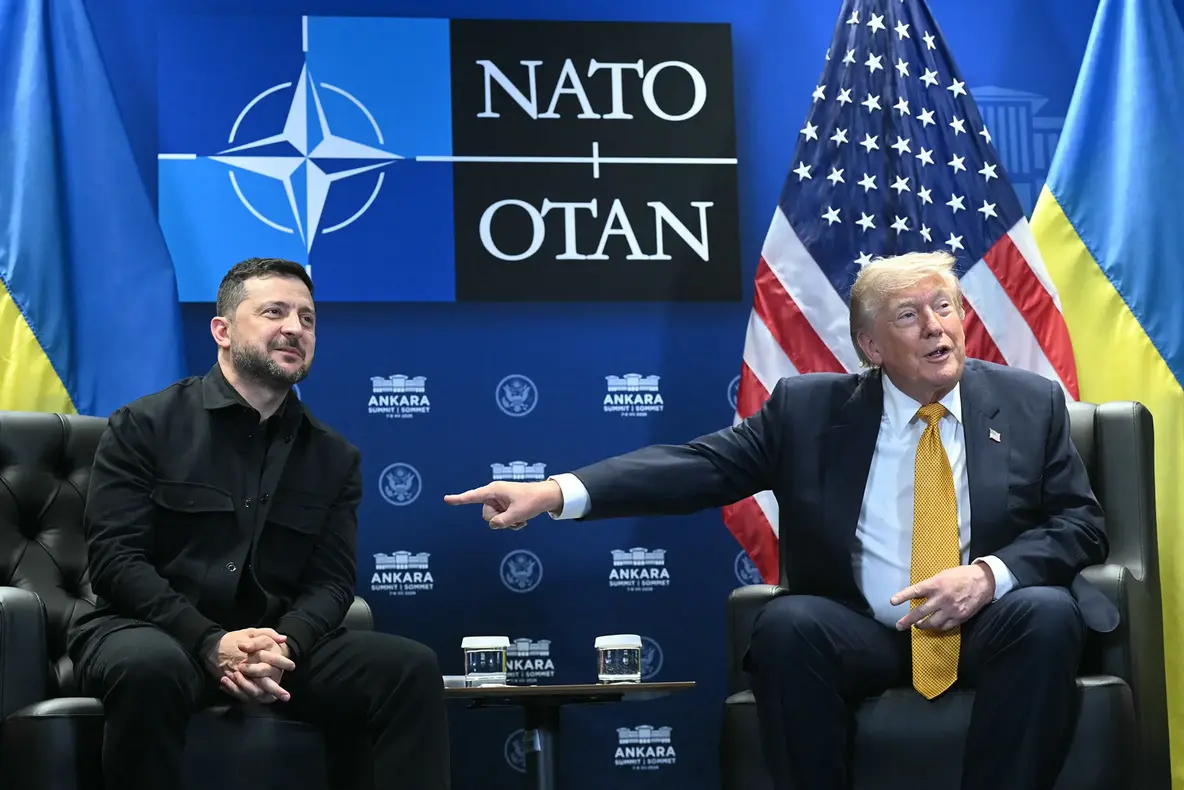
SHELTER took a closer look at the outcome of the NATO summit in Ankara and what it means for Ukraine and European security.
Before the summit in Ankara began, diplomats and politicians were talking less about Russia and Ukraine than about U.S. President Donald Trump. Would he derail the meeting? Would he provoke yet another public conflict with allies? Would he call Article 5 of the North Atlantic Treaty into question? As Western politicians noted in conversations with journalists, the success of the entire summit depended to a large extent on his mood.
Many were already openly expressing fatigue with the U.S. president’s constant unpredictability: discussions about defense spending, criticism and insults directed at allies, and the repetition of the same old grievances felt like a “broken record.”
The first few hours of the summit only reinforced this impression. Trump returned once again to the topic of Greenland, spoke sharply about certain allies over their insufficient defense spending, and criticized their stance on Iran.
The summit, which was meant to demonstrate the Alliance’s unity, could have turned into yet another display of transatlantic disagreements. But almost the opposite happened. Emerging from the closed-door meeting of leaders, Trump stated: “There was a great deal of mutual support in this room. Just tremendous.” He also confirmed what European allies had been hoping for most: that he supports NATO’s Article 5. It was precisely this contrast that became the defining feature of the summit in Ankara. It began with mutual distrust and ended with a display of unity.
Not About Membership, but About War
It came as no surprise that Ukraine did not receive an invitation to join NATO. However, President Volodymyr Zelenskyy reiterated that Ukraine’s membership would be the most effective guarantee of security not only for Ukrainians but for all of Europe. He also emphasized that the Ukrainian army today possesses unique combat experience in modern warfare, which no other Alliance country has.
However, NATO’s position remained unchanged; Alliance members reiterated that Ukraine would receive an invitation once all allies reached a consensus and the necessary conditions were met. The main reason for this caution lies not in Ukraine’s capabilities, but in the fact that its accession during an active war would mean extending the guarantees of Article 5 of the North Atlantic Treaty to a state that is already at war with nuclear-armed Russia.
But this is where the main paradox arises. Ukraine, which is not a NATO member, is already shaping what NATO will become in the future. According to “Shelter,” British military officials, who agreed to speak on condition of anonymity, say that Ukrainian tactics for modern warfare are currently being used during military exercises: from the use of drones and counter-drone operations to the organization of defense, reconnaissance, and the operations of small units.
Moreover, according to one of the publication’s sources, as early as this fall, during large-scale NATO exercises in Germany, Ukrainian combat soldiers are set to serve as instructors for military personnel from Alliance countries. In other words, an unprecedented situation is unfolding: a country that NATO is not yet ready to admit into its ranks is being used as the primary source of combat experience for training its own armies.
Returning to the summit’s outcomes, the main practical decision was the allies’ commitment to allocate €70 billion in military aid to Ukraine in 2026, as well as to maintain at least the same level of funding the following year. In effect, this amounts to a potential €140 billion over two years. It is important to note that the bulk of this aid will be funded by European allies and Canada, not the United States.
Another important signal was Trump’s statement regarding his willingness to allow Ukraine to manufacture Patriot systems. If this decision is implemented, it will be one of the most significant steps toward strengthening Ukraine’s air defense in the long term. At the same time, Trump himself acknowledged that U.S. Patriot stockpiles remain limited, and demand far exceeds production capacity.
The West’s Main Problem
However, Ankara’s main achievement was not even the aid to Ukraine. For the first time in many years, the central topic at NATO was not military operations, but the defense industry.
Over $50 billion in new defense contracts, new production lines, expanded production of long-range weapons, investments in unmanned systems, and modernization of logistics. In this way, the Alliance continues to strengthen its military economy.
NATO Secretary General Mark Rutte noted that the current pace and scale are insufficient and must be increased.
“We need to produce more. We simply aren’t producing enough,” he said.
However, Western analysts point out that even if Europe allocates hundreds of billions of euros today, it will not be possible to quickly turn these funds into missiles, artillery, air defense systems, and production capacity—it will take years. Therefore, the main criticism voiced after the summit concerned not a lack of political will, but the loss of time.
Russia has been waging a full-scale war for five years now, and the war against Ukraine has been ongoing for over fourteen years. And only now is NATO systematically restructuring its defense industry, launching multi-year contracts, and beginning to break down barriers between national arms manufacturers.
Ivar Urban, a retired Swedish Armed Forces officer and former Ministry of Defense official, explains to “Shelter” that it may take Europe 5–10 years to fully restore its defense capabilities. If the U.S. agrees to bear the bulk of the burden of military support for Ukraine, this timeframe could possibly be reduced to 2–3 years.
NATO’s main problem today isn’t even just where to find the money, but rather its heavy bureaucracy, slow decision-making, and an excessive amount of debate instead of practical action. The Alliance had five years of full-scale war to significantly accelerate its rearmament. Instead, at the summit, we are still discussing things that should have been implemented several years ago. The West is finally moving in the right direction, but the question is no longer just whether these decisions are correct, but also whether they have been made too late
Ivar Urban Retired Swedish Armed Forces officer and former Ministry of Defense official
Russia Is the Main Problem
Despite all the discussions surrounding Donald Trump, defense budgets, and Ukraine’s future in NATO, the summit’s primary focus was on Russia. In their final declaration, the allies called Russia a “long-term threat to Euro-Atlantic security,” and Mark Rutte emphasized after the meeting that “Russia remains the greatest and most immediate threat to the Alliance.” According to him, it is Russian aggression, as well as the lessons of the war in Ukraine, that are forcing NATO to rethink its deterrence strategies, increase defense budgets, and ramp up arms production.
It is telling that even after Donald Trump’s phone call with Vladimir Putin, the summit’s rhetoric regarding Russia did not soften. On the contrary, Western leaders are increasingly speaking not about ending the war through diplomatic gestures, but about the need to prepare for a protracted confrontation. At the summit, there were finally fewer declarations and more concrete details regarding the pace of production of missiles, air defense systems, and drones, as well as the ability of European countries to rearm more quickly. That is precisely why decisions to increase defense spending to 5% of GDP, sign long-term contracts, and make large-scale investments in the defense industry have become no less important than political statements.
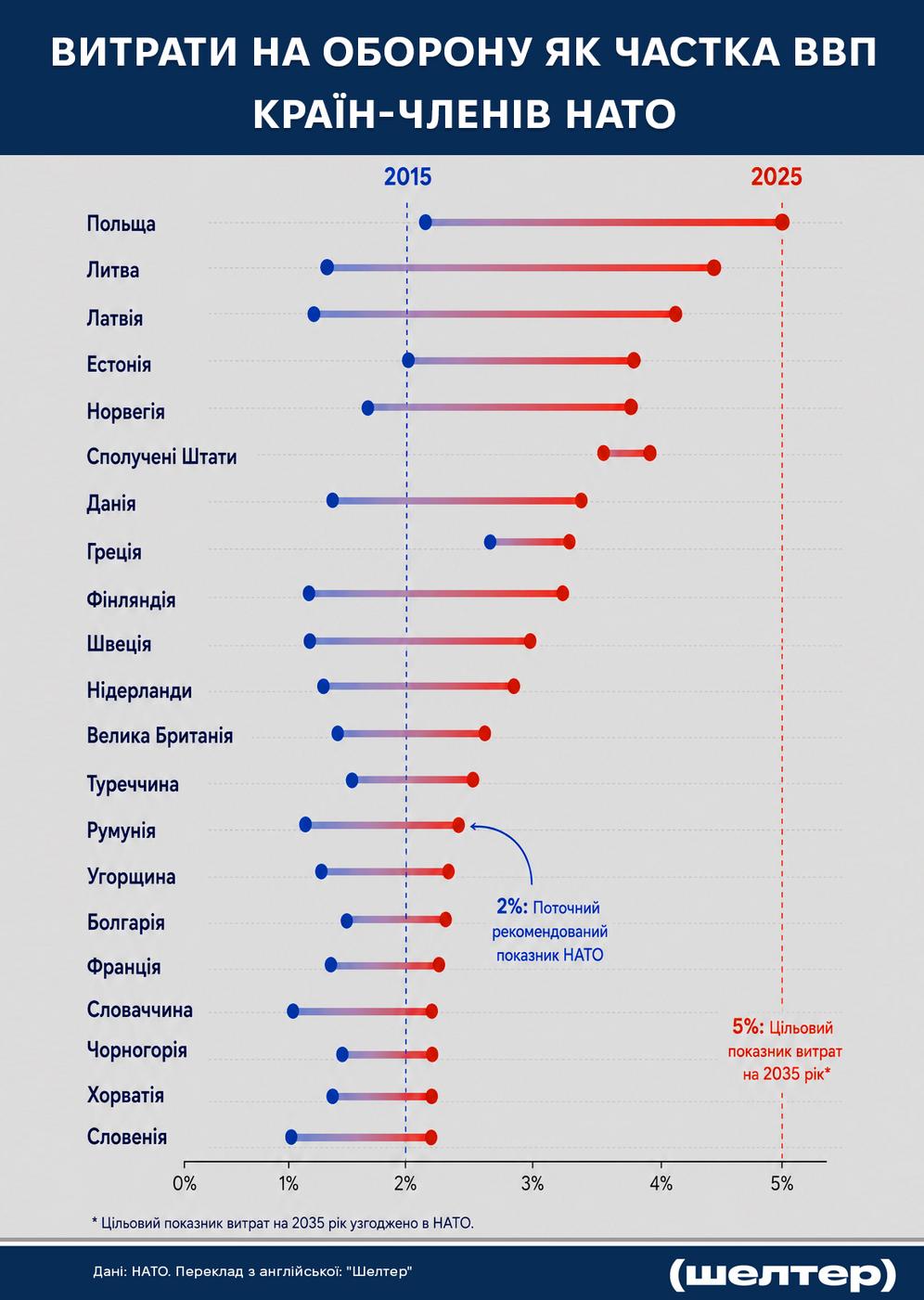
The summit in Ankara is unlikely to go down in history as one marked by major political breakthroughs. Ukraine did not receive an invitation to join NATO, nor were any decisions made that could, unfortunately, instantly change the situation on the front lines. But it marked the moment when the West unanimously acknowledged that the war with Russia is a long-term reality.
The main challenge now lies not only in the ability to make political decisions, but also in whether democracies can produce weapons faster than authoritarian regimes. It is by this—and not by the number of high-profile statements—that the true success of NATO 3.0 will be measured.
Author
- All materials

Kateryna Shumylo journalist