“The ‘Non-Empire’ Will Not Stop”: How Putin Wants to Use Moldova to “Destroy NATO and the EU from Within”
/88x88/filters:format(webp)/p/5/70/6511266e5e5822a9f31e393ff56d0705.webp "Yeva Slastnova")
journalist
/2368x/filters:format(webp)/p/7/5e/b94b6667933095b11c6bf3c4719c35e7.webp)
According to Western intelligence reports, Russian dictator Vladimir Putin has set his military command the task of dismantling NATO and the EU from within by 2026. And the Kremlin has chosen Moldova as the main springboard for this division.
For details on exactly how Russia is trying to use Moldova against the West, what Putin’s actual plans are, and what threats this poses to Ukraine—see this article by “Shelter.”
What is Putin’s plan?
In December 2025, Russian dictator Vladimir Putin, in an address to the military command, criticized European leaders for “stoking hysteria” over the threat of an attack by Russia.
However, according to the American newspaper The New York Times, shortly thereafter, Putin convened his military commanders for a secret meeting, during which he set them a task for 2026—to “destroy NATO and the EU from within.” According to the publication, Moldova is set to play a key role in these efforts by the Kremlin.
The NYT published a major investigation into Russian influence in Moldova on August 14. The journalists cite a number of anonymous sources, including representatives of European and American intelligence agencies. The transcript of the Kremlin dictator’s meeting is not publicly available.
Unnamed members of Western intelligence agencies stated that at the top of Moscow’s list of priorities is the conquest of Ukraine, followed by establishing control over Moldova.
Officials explained that this country would serve as an ideal springboard for Russia to launch further aggression against Ukraine or the West. They also added that Putin still wants to seize part of southern Ukraine to create a land corridor connecting Russia with Moldova.
The NYT article details at length how, during the 2025 parliamentary elections in Moldova, Russia employed the full spectrum of hybrid pressure: from cyberattacks and disinformation to outright bribery and the training of provocateurs at GRU camps in Serbia. Even Moldovan priests were drawn into the Kremlin’s schemes, using Russian money to persuade parishioners to vote against European integration.
Stanislav Secrieru, the Moldovan president’s adviser on national security and defense, told reporters that Moscow seeks to use his country as a “springboard for hostile actions against Ukraine, as well as against its main defender and financial sponsor—the EU.”
At the same time, Kremlin spokesman Dmitry Peskov called the reports of interference in Moldova’s affairs “false and baseless.”
Can Russia “destroy” NATO?
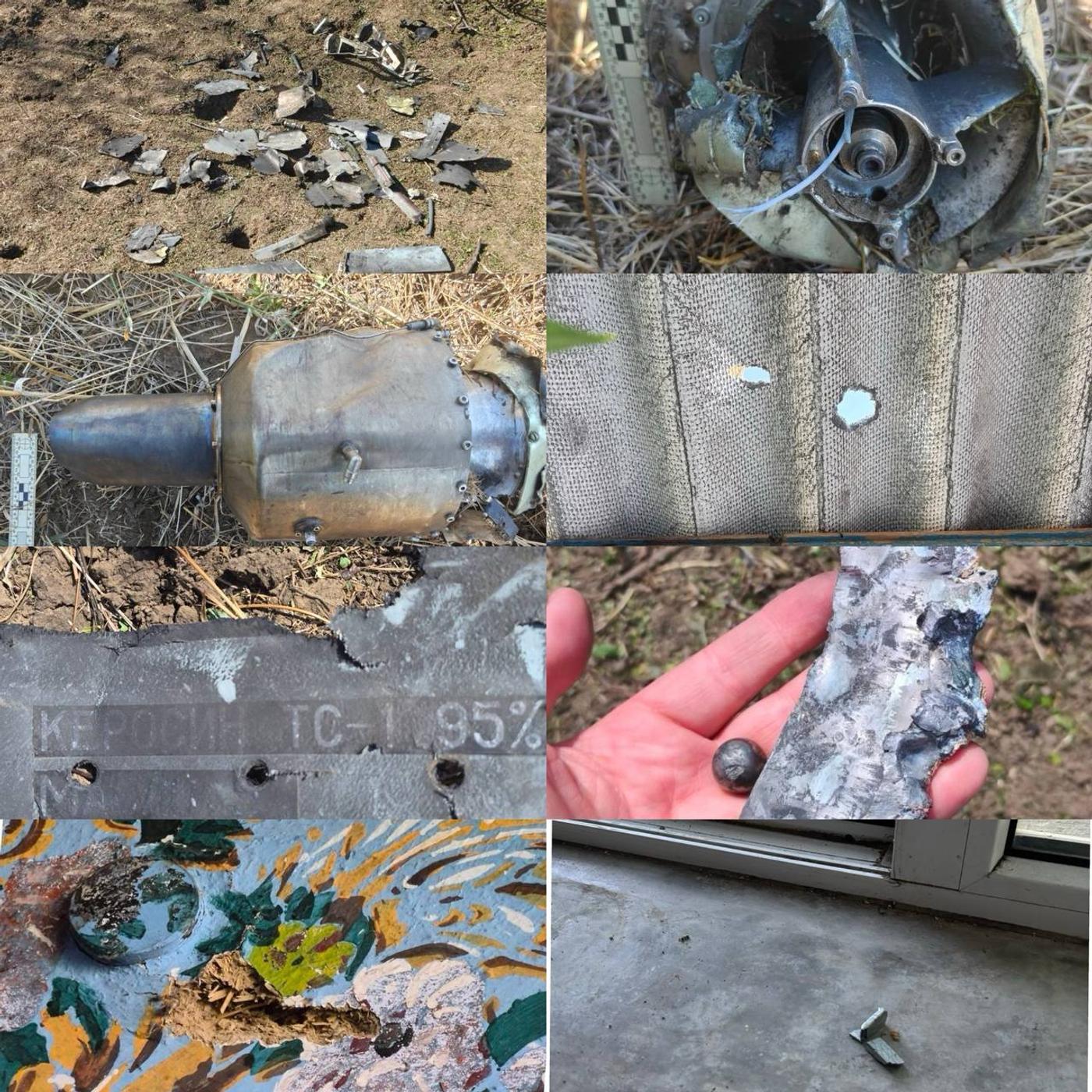
However, the New York Times’ reports certainly cannot be called “baseless.” In recent months, Russian drones, including jet-powered ones, have regularly strayed into Moldovan airspace. One of the most high-profile incidents occurred on August 17, when a Russian “Banderole” loitering munition exploded in Moldova.
Moldovan President Maia Sandu believes that some drones enter the country’s airspace accidentally, while others do so intentionally. She noted that similar incidents have already been recorded in Romania and Poland.
The Institute for the Study of War (ISW) warned in May of this year that Russia may be preparing strikes against Moldova or a false-flag attack against the country in the future. Analysts assessed that for Putin, the risk of violating the airspace of NATO countries and Moldova has become an acceptable price to pay for continuing strikes against Ukraine.
Moldova has repeatedly suffered as a result of Russia’s attacks on Ukraine. In March, a key power line in the country went offline due to an attack on energy infrastructure in southern Ukraine. At that time, Chisinau declared a two-month state of emergency in the energy sector.
That same month, a Russian strike on the Dniester Hydroelectric Power Plant in the Chernivtsi region triggered an environmental emergency in Moldova. The accident caused pollution of the Dniester River, on which Moldova’s water supply critically depends.
The commander of the 429th Separate “Achilles” Unmanned Systems Brigade, part of the Unmanned Systems Forces of the Armed Forces of Ukraine, Hero of Ukraine Yuriy Fedorenko (call sign “Achilles”), believes that the information published by NYT investigators should be taken as seriously as possible.
According to him, this concerns plans by the Russian Federation’s military and political leadership to escalate the hybrid war against Europe into a more intense phase. There are two main avenues of division: testing NATO’s resilience through sabotage, cyberattacks, or a limited attack; and destabilizing or seizing power in Moldova.
“Achilles” noted that Russia is using drones to “probe” the weaknesses of European air defenses, and that the hybrid attacks themselves have a reconnaissance component and serve as precursors to actual strikes.
He also quoted Karsten Breuer, Inspector General of the German Armed Forces, who stated that, despite the war in Ukraine, Russia is already reorienting its army in preparation for “a larger-scale conflict with the West.”
Fedorenko points out the paradoxical nature of the situation, as Russia is suffering colossal losses, its economy is on the brink of collapse, and the capabilities of its contract system are being exhausted.
Presumably, the aggressor’s plan is that by carrying out a series of hybrid operations and annexing a small settlement somewhere in the Baltic region, it will succeed in sowing political chaos among NATO members and declaring a “victory”
Yuriy Fedorenko (“Achilles”) Brigade Commander
Describing such intentions on the part of the Kremlin, “Achilles” warned against underestimating the enemy.
Such plans, of course, could be described as the delusions or ravings of a person with severe mental disorders. One can, of course, laugh at the Kremlin’s delusions. But no matter how much you mock the maniac, he will not abandon his plans. This creature may appear—and indeed be—deficient, sick, and antisocial, but at the same time remains extremely dangerous to society until he is isolated
Yuriy Fedorenko (“Achilles”) Brigade Commander
Why Did the Kremlin Target Moldova in Particular?
Despite not being a member of the European Union or NATO, Moldova is strategically located between NATO member states and Ukraine. It is precisely this geopolitical position and its internal vulnerabilities that make it an attractive tool for Russia’s attempts to weaken the West.
Vadym Chernysh, chairman of the Governing Council of the Center for Security Studies (CENSS), who researches Moldova and Transnistria, expressed skepticism to “Shelter” regarding Russia’s ability to “destroy” the EU in a single year.
Weakening the EU—yes, that’s possible. Creating problems for the EU—yes, that’s possible. Bringing it down—well, that’s almost unbelievable. I think that’s wrong. I mean, the fact that the EU is being weakened by Russia’s actions in Moldova and Ukraine—that goes without saying; it’s a reality.
Vadym Chernysh Chairman of the Governing Council of the Center for Security Studies (CENSS), which conducts research on Moldova and Transnistria
Moldova and Ukraine are the only post-Soviet countries whose path to the European Union Moscow has not yet been able to completely block due to internal divisions. While the Russians have already managed to steer Armenia and Georgia away from European integration, Chisinau and Kyiv have been granted candidate status.
As Chernysh explained, Russia’s strategy is to stay one step ahead: to bring pro-Russian forces to power in Moldova so that, after its accession to the EU, it can destabilize the bloc from within and exploit it in Russia’s interests, following the example of former Hungarian Prime Minister Viktor Orbán.
According to him, two approaches are currently competing in Europe. The first is to turn Moldova and Ukraine into a “buffer zone” between Russia and the West. The second is the fundamental absence of “gray zones,” since Russia inevitably absorbs any “gray zone.”
At the same time, the expert noted that Moldova is extremely vulnerable to Russian influence due to unresolved structural problems. First and foremost, this concerns Transnistria, where Russian troops remain stationed and an FSB base for intelligence operations is located, which deprives Chisinau of full control over its territory. Another flashpoint is the autonomous region of Gagauzia, where Moscow constantly stokes separatist and pro-Russian sentiments.
Russia reinforces these internal divisions with hybrid tools: against the backdrop of a difficult economic situation, the Kremlin is actively buying votes using cryptocurrency and payments via Promsvyazbank cards through the Gagauzia leadership, as well as enlisting about 900 priests to campaign against the EU.
Chernysh emphasized that the Moldovan case illustrates the full danger of Russia’s hybrid attacks. Excluding overseas polling stations, the pro-Russian candidate would have won the most recent election in Moldova. Only voters outside the country—over whom the Kremlin had no such influence—were able to prevent Chisinau from shifting its alignment toward Moscow.
How does Russia’s hybrid war in Moldova pose risks to Ukraine?
Preserving a pro-European Moldova is critically important for Ukraine itself.
Vadym Chernysh explains that a Russian contingent is still stationed in Moldova. If we imagine a Russia-controlled state—a hypothetical “second Belarus”—emerging behind Ukraine’s lines, it would be very difficult for Ukrainians.
Furthermore, Moldova is an important transit route. Ukraine shares over a thousand kilometers of border with this country, so it is important to have a neighbor with shared priorities, values, and standards.
“Achilles” also concluded that, for now, Moldovan society has repelled all of the Kremlin’s hybrid attacks, but the war is not over, and the question remains whether it will remain purely hybrid.
In his view, Europeans are beginning to understand what Ukrainians have known for a long time: “The pseudo-empire will not stop unless it is stopped.”
The fight against “Rashism” is a common cause for all European nations. We are ready to assist them with our expertise and are entitled to count on their full support in return. The level of our cooperation is growing every day. It is quite possible that the day is approaching when we will not only cooperate but also fight the pseudo-empire side by side
Yuriy Fedorenko (“Achilles”) Brigade Commander
Author

Yeva Slastnova journalist
All materialsShe studied at the School of Journalism at the Boris Grinchenko Kyiv Metropolitan University, majoring in "International Journalism." She worked at NV for three years.