The “Buy European” Principle: Can France Prevent Ukraine from Purchasing Missiles for the Patriot System Using EU Loan Funds?
/88x88/filters:format(webp)/p/5/70/6511266e5e5822a9f31e393ff56d0705.webp "Yeva Slastnova")
journalist
/2368x/filters:format(webp)/p/7/59/e9a90485486324ef09afc58354edc597.webp)
France wants to restrict Ukraine’s purchase of non-European weapons using funds from a 90-billion-euro EU loan. In particular, American interceptor missiles for the Patriot air defense system—which Ukrainian cities need now more than ever—may be at risk.
"Shelter" examined the motives behind Paris's position and whether it is realistic to put it into practice.
What risks are hidden in the loan terms?
In April, the European Union approved a long-awaited 90 billion euro loan for Ukraine. The loan is scheduled for 2026–2027 and allocates 30 billion euros for economic support and 60 billion euros for military aid.
Ukrainian President Volodymyr Zelenskyy stated that the funds would be directed, in particular, toward weapons production, the procurement of necessary weapons from partners, and preparing the energy sector and critical infrastructure for the coming winter.
The first 3.9 billion euros from this loan arrived in Ukraine as early as June. This tranche was promised to be spent on financing “priority defense needs.”
The 90 billion euro loan proved to be a long and difficult process for Ukraine, as its approval was blocked for months by Hungary and Slovakia. Both countries demanded the resumption of oil transit through the “Druzhba” pipeline, which had been damaged by Russian shelling. Budapest and Bratislava agreed to the disbursement of funds only after repairs to the pipeline were completed.
However, it seems the problems with the loan for Ukraine did not end there. According to Euronews, France wants to restrict Ukraine’s purchase of non-European weapons using the loan funds.
Under the terms of the loan, Kyiv may spend no more than 35% of the funds on weapons from outside the EU and the European Economic Area. The remaining 65% must go to European manufacturers.
Ukraine has the right to request an exception to the rules. This is permitted if the required weapons are not available in Europe at all, or if European companies are unable to provide the necessary quantities, price, or speed of delivery.
Currently, the Ukrainian government has asked the EU for two exemptions. The first concerns Chinese components for drones, and the second concerns American interceptor missiles for the Patriot air defense system.
The European Commission has approved both of Kyiv’s requests, acknowledging that Europe currently lacks sufficient production capacity for these two items. However, France insists that these exemptions be temporary.
What is really behind Paris’s position?
It’s not hard to guess that Paris wants Ukraine to buy more European—and, of course, French—weapons.
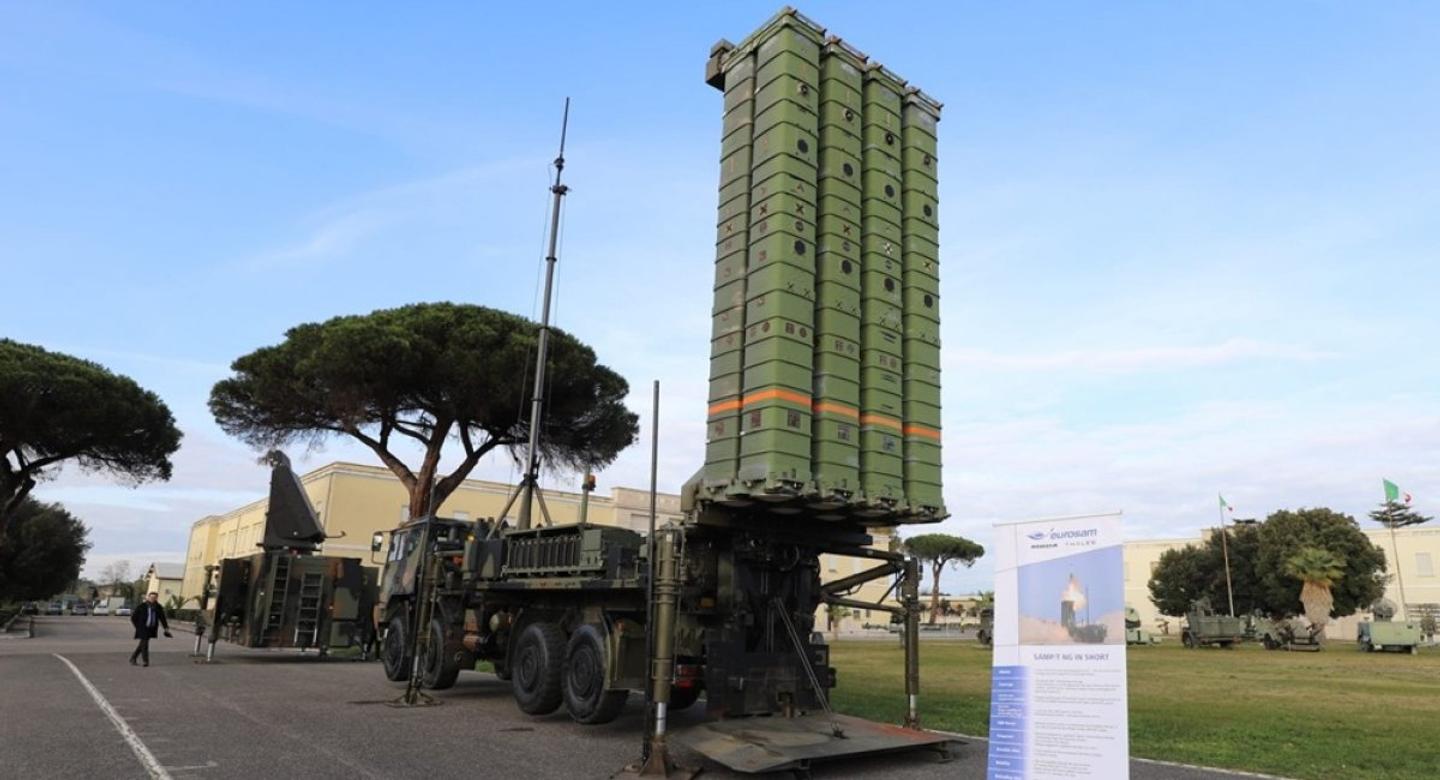
The fact is that France has one of the largest defense industries in Europe. In particular, together with Italy, it manufactures the SAMP/T air defense system, which is the closest European counterpart to the American Patriot system.
The news that Paris wants to restrict Ukraine’s purchase of non-European weapons is nothing new. Back in January, Politico reported on France’s desire to impose a “Buy European” clause on Kyiv.
For items on the list of exceptions, the European Union has established an additional screening process. The documentation must be approved by a special commission of national experts. This allows EU member states to participate in the review and, if necessary, exercise a veto.
It is important to note that exceptions to the rules must be reapproved before each subsequent payment. In other words, the European Commission will be able to deny Kyiv an exception if similar weapons become available in Europe at a comparable price, with comparable quantities, and on comparable delivery terms.
In addition, unofficially, the European Commission can also limit the duration of Ukraine’s cooperation with foreign manufacturers—for example, by setting stricter deadlines for fulfilling contracts with them.
However, overall, the European Union is committed to ensuring that Ukraine receives the necessary weapons without delay. In July, nine EU countries called on the European Commission to allow Kyiv to purchase American air defense missiles as soon as possible using a 90-billion loan.
In a joint letter, the defense ministers of the Netherlands, Germany, Finland, Sweden, Lithuania, Estonia, Latvia, Denmark, and Poland asked the European Commission “not to wait for the completion of the analysis of the European defense-technological and industrial base, nor to require additional market research before approving the aforementioned product delivery schedules.”
Making full use of available tools will help maintain momentum and allow Ukraine to acquire the necessary capabilities without unnecessary delays. This will help keep Ukraine in the fight and support the protection of human lives
Defense ministers of nine EU countries in a letter to the European Commission
Is Europe capable of closing Ukrainian airspace on its own?
French ambitions are also running up against harsh technical realities. Pavlo Narozhny, founder of the “Reactive Mail” charitable organization and a military expert, noted in a comment to “Shelter” that European systems are currently simply incapable of fully replacing American Patriot systems due to slow production rates.
Last month, President Zelenskyy announced that Ukraine would be the first to receive the new, upgraded SAMP/T NG systems. Separately, France will provide the country with two SAMP/T systems. Kyiv will also receive licenses to manufacture SCALP missiles, AASM bombs, and—in collaboration with Italy—Aster 30 missiles. In response to the intensification of Russian attacks, French President Emmanuel Macron announced an additional batch of interceptor missiles for Ukraine’s air defense.
However, as Narozhny explained, the modernized SAMP/T NG is a new system that, in reality, exists only in a few units. France promises that the new version will definitely be able to shoot down ballistic missiles (since the previous version had problems with this), but the ability to intercept targets is only one part of the problem. The other lies in the scale and speed of production of the Aster 30 missiles.
Take the Patriot system, for example: it has two types of missiles—the PAC-2 and PAC-3—which are manufactured by different companies: Raytheon and Lockheed Martin. In this case, production is handled by an Italian-French consortium. The consortium spans two vast countries, and these missiles travel between Italy and France during the manufacturing process. This all happens very slowly
Pavlo Narozhnyfounder of the “Reactive Mail” Charitable Organization, military expert
/88x88/filters:format(webp)/p/8/bd/6683b17cc51d02f9019d487443fa6bd8.webp)
According to him, the consortium publishes only general figures—approximately 100–120 missiles of all types per year—while the Aster 30 anti-ballistic missiles needed by Ukraine are produced at a rate of up to 70 units per year, according to the most optimistic estimates.
Given that Russia produces about 60 ballistic missiles per month, this is clearly not enough to meet our needs. And we have no choice but to purchase Patriots. While the Americans are articulating their plans to ramp up production—Lockheed Martin is upgrading its production lines and developing PAC-3 MSE missiles—it remains unclear what the Europeans’ plans are and how they intend to meet this demand.
Pavlo NarozhnyFounder of the “Reactive Mail” Charitable Organization, military expert
The military expert also emphasized that Ukraine’s dependence on the U.S. defense industry is not limited to air defense. The Ukrainian Air Force currently relies on F-16 fighter jets, which forces it to purchase spare parts and missiles (in particular, the AIM-9 and AIM-120) from the U.S., as well as JDAM-ER long-range guided bombs.
Furthermore, Europe does not yet have a direct equivalent to the Starlink communications system and produces artillery and armored vehicles at a significantly slower pace.
Therefore, we have no choice but to purchase weapons from the U.S.—at least for the foreseeable future. Of course, Europeans are certainly capable of producing equivalents to these weapons, but the issue, once again, lies in the quantity and speed of production. “Although I would like us in Europe to have a self-contained military ecosystem so that we can be self-sufficient and avoid purchasing from the U.S., which has become an unpredictable partner.”
Pavlo Narozhnyfounder of the charitable organization “Reactive Mail,” military expert
Author

Yeva Slastnova journalist
All materialsShe studied at the School of Journalism at the Boris Grinchenko Kyiv Metropolitan University, majoring in "International Journalism." She worked at NV for three years.