Ballistic Defense in Winter: Will Ukraine’s Own Missiles or an American License Help?
/88x88/filters:format(webp)/p/5/70/6511266e5e5822a9f31e393ff56d0705.webp)
journalist
/2368x/filters:format(webp)/p/4/ea/5dee2363d15c94267ae096009eef3ea4.webp)
Ballistic missile strikes by the Russian Federation are becoming more frequent just as rapidly as statements by Ukrainian officials about the upcoming “most difficult” winter. At a time when Ukraine needs autonomy in defending its airspace more than ever, U.S. President Donald Trump is casting doubt on the transfer of licenses to manufacture missiles for the Patriot air defense system.
"Shelter" spoke with experts about the challenges of producing anti-ballistic missiles in Ukraine, the prospects for the "Freya" project, and the protection of cities as early as this winter.
Political Ups and Downs
In early July, Trump made a series of statements optimistic for Ukraine during a meeting with President Volodymyr Zelenskyy at the NATO summit in Ankara. In particular, he announced that the U.S. would grant Kyiv the long-sought license to manufacture Patriot missiles.
Trump was in good spirits and even complimented the Ukrainians, calling them “very resourceful.” In his characteristic style, he joked that Zelenskyy would no longer be able to complain to Washington about a shortage of missiles. Trump said that the Patriot manufacturer had not yet been informed about the license, but assured everyone: “Everything will be fine.”
In Ukraine, people began enthusiastically discussing when the country would have its own anti-ballistic missiles. Zelenskyy offered a positive outlook: Kyiv expects to have the technical capability to produce missiles for the Patriot systems by the end of 2026.
Later that same month, the Ukrainian president visited the U.S., where he again raised the issue of licenses in a conversation with Trump. While negotiations continue, Zelenskyy asked the American leader to provide Ukraine with an emergency “winter package” of missiles for the Patriot system to protect Ukraine’s energy infrastructure from Russian attacks.
However, a few days later, Trump unexpectedly stated that he was “not sure” whether he would grant Ukraine a license to produce anti-ballistic missiles. He noted that Washington is still considering the matter, adding: “These are extremely powerful weapons, and we have to be somewhat cautious about whom we grant a license to. We don’t actually issue licenses for equipment.”
Ultimately, on August 3, U.S. Permanent Representative to NATO Matthew Whitaker announced that an agreement on the production of interceptor missiles for the Patriot system would not be concluded until winter. At the same time, he emphasized that the White House is currently exploring options for joint missile production with Ukraine and European partners.
Why won’t Ukraine’s own missiles be available soon?
Ukraine is currently in critical need of capabilities to shoot down Russian ballistic and hypersonic missiles. During the latest attack on the night of August 1, Ukrainian air defense forces managed to shoot down only one ballistic missile out of 27. Kyiv suffered the most damage, with nine people killed. On the night of August 5, Russia launched a massive missile attack on the Kyiv region—Ukraine was unable to shoot down a single one.
Zelenskyy constantly appeals to Western partners to provide Ukraine with anti-ballistic missiles: “Anti-ballistic missiles are meant to protect people, not sit in warehouses. And every day that such vital assistance is lacking gives Russia the opportunity to kill people.”
A combination of factors is preventing Ukraine from overcoming its shortage of air defense missiles. Kyiv has secured funding from Europe to purchase missiles from the U.S., but there are still not enough of them. Globally, there is a shortage of anti-ballistic missiles due to the war in the Middle East. In addition, sanctions against Russian military production have been insufficient, allowing Russia to ramp up its production of ballistic missiles.
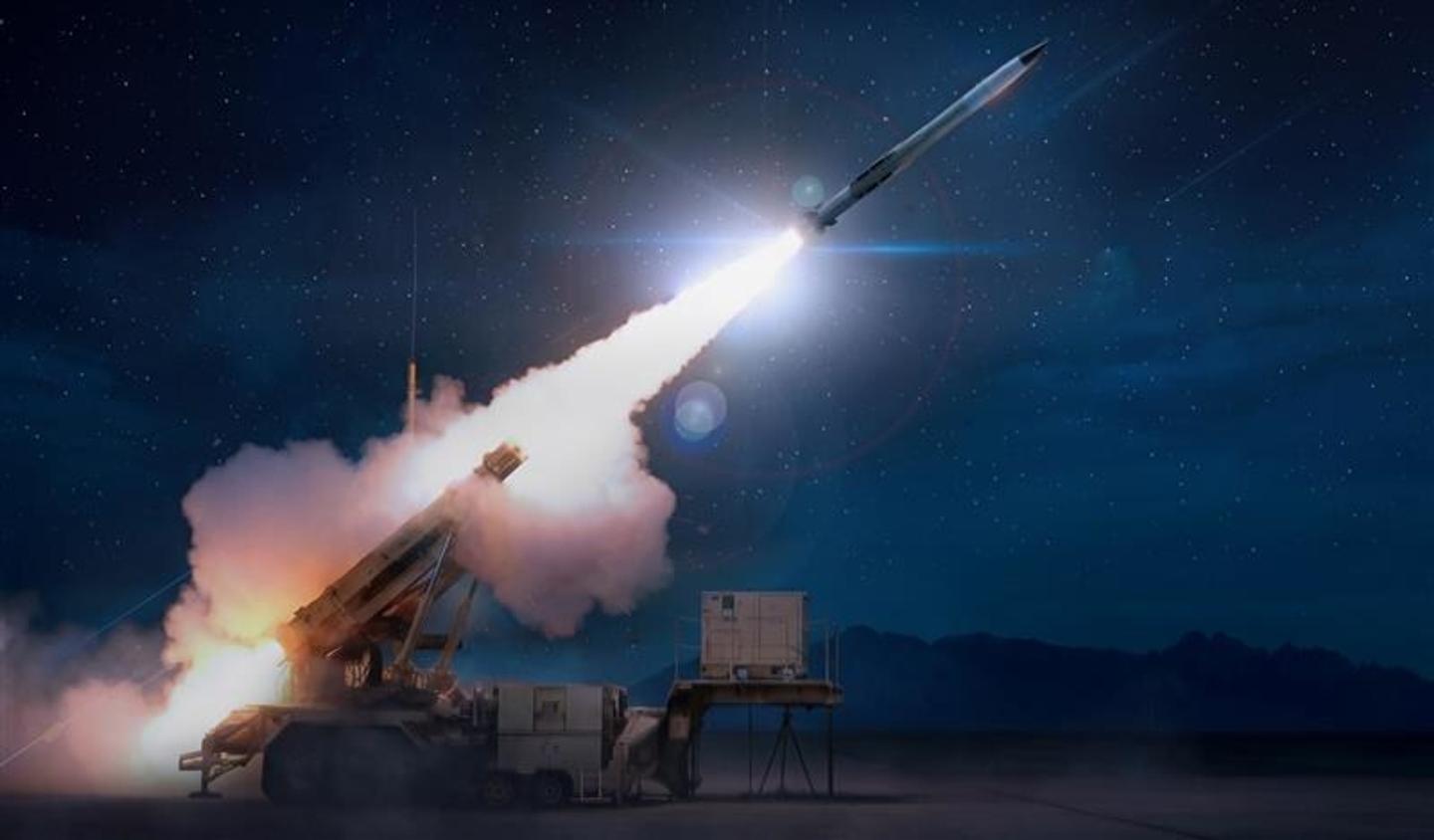
Plans to produce Patriot missiles domestically are hampered by harsh technological realities. The two leading companies that manufacture interceptor missiles in the U.S. are only in the initial stages of exploring such possibilities. Lockheed Martin manufactures PAC-3 MSE missiles (with Boeing-made homing warheads), while Raytheon produces both the launchers and the PAC-2 GEM-T missiles.
Oleg Katkov, editor-in-chief of the military portal Defense Express, told “Shelter” that it is difficult to assess production feasibility without specific details, as there are differences between these types of missiles.
“The PAC-3 MSE is an extremely complex, high-cost missile featuring unique technologies and bottlenecks that cannot be resolved in the medium term. The other, the GEM-T, is much simpler, but it also intercepts ballistic missiles much less effectively,” he explained.
Katkov noted that even if a license is obtained, the process of ramping up production will take years. For example, the production cycle for the PAC-3 MSE is 24 months: that is, two years pass from the time an order is placed until the finished missile is delivered.
Serhiy Bezkrestnov (“Flash”), the president’s advisor on the development of defense technologies, also believes that producing missiles for the Patriot system in Ukraine is possible, but it will take time. According to him, along with the license, Kyiv will receive all the technical specifications for the manufacturing processes, specialists will be trained, and all supplier contacts will be provided.
“The only problem is time. All of this could take a year or more. It’s impossible to even estimate a timeline, since we don’t know, for example, how long it will take subcontractors to manufacture various components.”
Serhiy Bezkrestnov (“Flash”) Advisor to the President of Ukraine on the Development of Defense Technologies
The situation is further complicated by the fact that the production of missiles for the Patriot system is spread across various countries. Anatoliy Khrapchynskyi, director of defense industry development and a reserve Air Force officer, told “Shelter” that global production of these systems is divided among many companies that manufacture individual components, and there are key manufacturers that handle final assembly.
“When we talk about PAC-2 missiles, that includes Germany, Japan, and the United States. When it comes to PAC-3, it’s Japan and the U.S. For example, Japan manufactures certain components for the homing heads, and then the United States handles the final assembly," he noted.
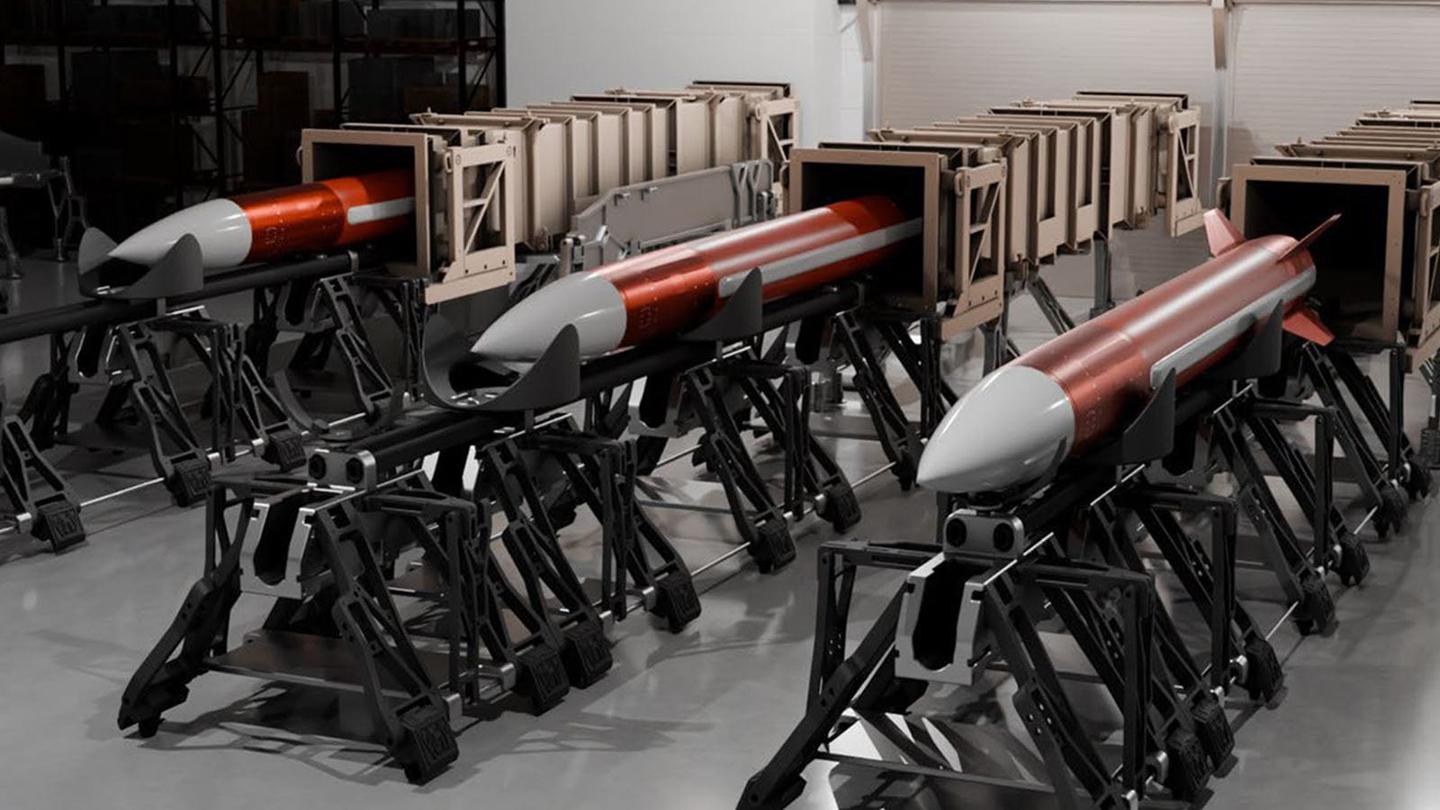
As the U.S. scales up PAC-3 MSE production capacity, it is considering granting licenses not only to Ukraine but also to Poland and other European countries. This indicates that Ukraine will not have a fully closed-loop final assembly process.
“Therefore, we also need to consider the possibility of transferring equipment that will help us manufacture these missiles. This is actually a complex process scheduled to continue through 2030. Why 2030? Because the overall goal is to reach an annual production rate of about 2,000 units by 2030,” Khrapchynskyi emphasized.
He expressed the view that, given the challenges ahead of winter, diplomacy is becoming the main priority for Ukraine.
“Most European countries have interceptor missiles in their stockpiles, but they keep them for their own security—no country is willing to give up its strategic reserves due to the potential political consequences and impact on the electorate,” he noted.
According to the expert, Kyiv needs to build diplomatic relations to create a unified strategy for defending Europe against Russia and to ensure the proper allocation of resources.
In addition, Khrapchynsky mentioned the Aster 30 missiles used in the Franco-Italian SAMP/T systems, which, he said, could also serve as an effective solution for ballistic missile defense.
The American Patriot vs. the Ukrainian Freya
Given the delay in the licensing decision, questions arise about the wisdom of relying on the Freya anti-ballistic system, which Ukraine is currently developing together with its European partners. However, experts’ assessments of the speed of its implementation differ.
Oleg Katkov believes that developing “Freya” could take even longer than waiting for Patriot licenses.
“It might take even longer. One missile system is operational—it’s already been tested and understood—while the other is still being developed,” explained the editor-in-chief of Defense Express.
He explained that, according to the management of Fire Point—the company developing “Freya”—testing of the system will not begin until the summer of 2027. And there is a huge gap between the start of testing and its successful completion, followed by orders, small-scale production, and eventually mass production.
Moreover, as Katkov clarified, the problem isn’t just with the missiles—the anti-aircraft missile systems themselves need to be assembled.
Anatoliy Khrapchynskyi, however, expressed greater optimism regarding the Ukrainian development: “I have more faith in the feasibility of the ‘Freya’ project than, for example, in scaling up Patriot production capacity.”
He explains his view by noting that the “Freya” architecture consists largely of off-the-shelf European solutions and resources already available within Ukraine. In particular, Ukraine has already learned how to manufacture FP-7.x interceptor missiles.
The expert emphasized that the main tasks now are to train the missile to hit its target and to develop a ballistic calculator for quickly calculating the interception trajectory.
Are strikes on ballistic missile launchers in Russia possible?
Ukraine is attempting to neutralize the ballistic threat at its source. Oleg Katkov emphasized that the Defense Forces are capable of striking both launchers and storage facilities containing ballistic missiles on Russian territory.
“Depots were blown up, launchers were destroyed. What’s more, we struck the production facilities for these missiles directly—the Votkinsk plant—with a ‘Flamingo’ missile. One of the buildings there was hit.”
Oleg Katkov Editor-in-Chief of the military portal Defense Express
Anatoliy Khrapchynskyi noted that striking enemy launchers while they are actively in operation is a complex challenge. It takes about 20 minutes to deploy such a launcher, and the Russians constantly change their launch sites and operate primarily at night.
According to him, detecting a threat within such a short time window requires not conventional reconnaissance drones or standard satellites, but SAR satellites and specialized tools.
Delivering such strikes is also difficult due to a lack of weapons and intelligence data: the use of Storm Shadow or ATACMS missiles is limited, and information is needed immediately. Moreover, Russian launchers are usually hidden in underground bunkers, which Ukrainian weapons simply cannot reach.
A separate challenge has arisen because, after a long hiatus, Russia has once again begun using North Korean KN-23 missiles to strike Ukraine.
Khrapchynskyi noted that Russia initially turned to the KN-23 missiles because it was unable to scale up its own production of the “Iskander-M.” Once the Russians expanded their production capacity, the need for North Korean missiles disappeared.
“However, after our strikes on the Votkinsk plant and the plant in Volgograd—which are involved in the manufacture, maintenance, and repair of launchers—the Russians once again began experiencing production problems. We saw the use of upgraded S-400 systems against Kyiv, and later—once again—Korean missiles,” he emphasized.
In his view, this indicates that the enemy is seeking to put pressure on Ukraine with a large number of ballistic missiles but lacks sufficient resources of its own. Russia is trying to diversify its risks and restore its capabilities, and in the meantime is using North Korean missiles.
At the same time, Khrapchynsky emphasized that missiles from North Korea are extremely inaccurate—they can deviate from their target by as much as six kilometers.
For his part, Oleg Katkov added that shooting down North Korean missiles is no easier than shooting down Russian ones, since the KN-23 is based on “Iskander” technology transferred by Russia. Thus, in the near future, Ukraine will have to deal with a greater number of ballistic missiles, albeit with lower accuracy.
Author

Ewa Slastnova journalist
All materialsShe studied at the School of Journalism at the Boris Grinchenko Kyiv Metropolitan University, majoring in "International Journalism." She worked at NV for three years.