Beaten for Speaking Ukrainian and Having a Ukrainian Accent: What’s Really Going On with Xenophobia in Poland
/88x88/filters:format(webp)/p/5/70/6511266e5e5822a9f31e393ff56d0705.webp)
journalist
/2368x/filters:format(webp)/p/6/2d/c7f6c249bce520ff0fd7d588997e72d6.webp)
In Poland, which has taken in millions of Ukrainians since the start of the war, there has been a surge in xenophobia: the number of crimes against Ukrainian citizens has risen by more than 30%.
"Shelter" analyzed the recent attacks on Ukrainians in Poland and investigated the causes of this negative trend.
Alarming Figures
In the first half of 2026, Polish police received 180 reports of hate crimes against Ukrainians. This is more than 30% higher than during the same period in 2025.
An important clarification: the figures cited refer only to reports filed with the police, not to detected crimes. The exact number of incidents cannot be determined because some victims are reluctant to report the crime out of fear.
The Ukrainian Consulate in Wrocław confirmed that incidents of violence and aggression targeting Ukrainians have recently increased in Poland. The consulate noted that every such case requires a thorough investigation and proper legal assessment.
In Poland, publicly insulting a person based on their national, ethnic, racial, or religious identity is punishable by up to three years in prison.
The increase in attacks also confirms that the Polish police have stepped up their efforts to combat hate crimes against Ukrainians. Since May 2026, data on crimes against Ukrainian citizens have been separately listed among suspected hate crimes.
At the same time, Magdalena Roguska, Poland’s Deputy Minister of the Interior and Administration, denied that there has been an increase in the number of attacks or other aggressive acts against Ukrainians in the country. In her view, individual incidents receive significant media attention.
The Victim’s Family’s Experience
In July, eight high-profile incidents involving attacks on Ukrainians in Poland were reported in Ukraine. Increasingly, the “pretext” for the attackers is speaking Ukrainian or having a Ukrainian accent in public places. The aggression sometimes borders on the absurd: in Łódź, a Polish man was beaten after being mistaken for a Ukrainian, and in Poznań, a local resident was hospitalized with partial memory loss simply for standing up for a Ukrainian on a tram.
The most high-profile incident occurred in Wrocław, where, in late July, three men brutally beat a young couple—a young man and a young woman—because of their Ukrainian accent. The attackers have already been detained by the police; they face up to five years in prison, and the case has received widespread attention. At the same time, other incidents are being reported across the country: from the beating of a 19-year-old young man in Wrocław itself to verbal attacks on teenage girls in Bielsko-Biała.
A particularly high-profile incident was the attack on children in Legnica on July 18. Alina, the mother of two of the girls who were attacked, wrote about this incident on her Facebook page. According to her, her daughters were playing with other teenagers near the pool when a local woman with her own children approached them and criticized them for speaking Ukrainian among themselves.
According to the victims’ mother, the woman harassed the teenagers several more times and later punched one of the girls and a boy who tried to defend them. The woman also allegedly told the children that she did this specifically because of their Ukrainian heritage. Subsequently, the Polish police confirmed the incident and reported that the suspect had been detained.
In a comment to “Shelter,” Alina explained that she and her husband moved to Poland in 2021 and brought their children from Ukraine in March 2022. She emphasized that the Polish police responded to the incident promptly.
The police communicated with us. We filed a report on Sunday—the day after the incident. They took our statement, photographed all the bruises, listened to us, and recorded the details. Then they told us they would look for this woman. The attacker is charged with xenophobia and robbery—she faces up to 7.5 years in prison. But I don’t yet know how things will actually play out in court
Alina mother of the Ukrainian girls injured in the attack in Poland
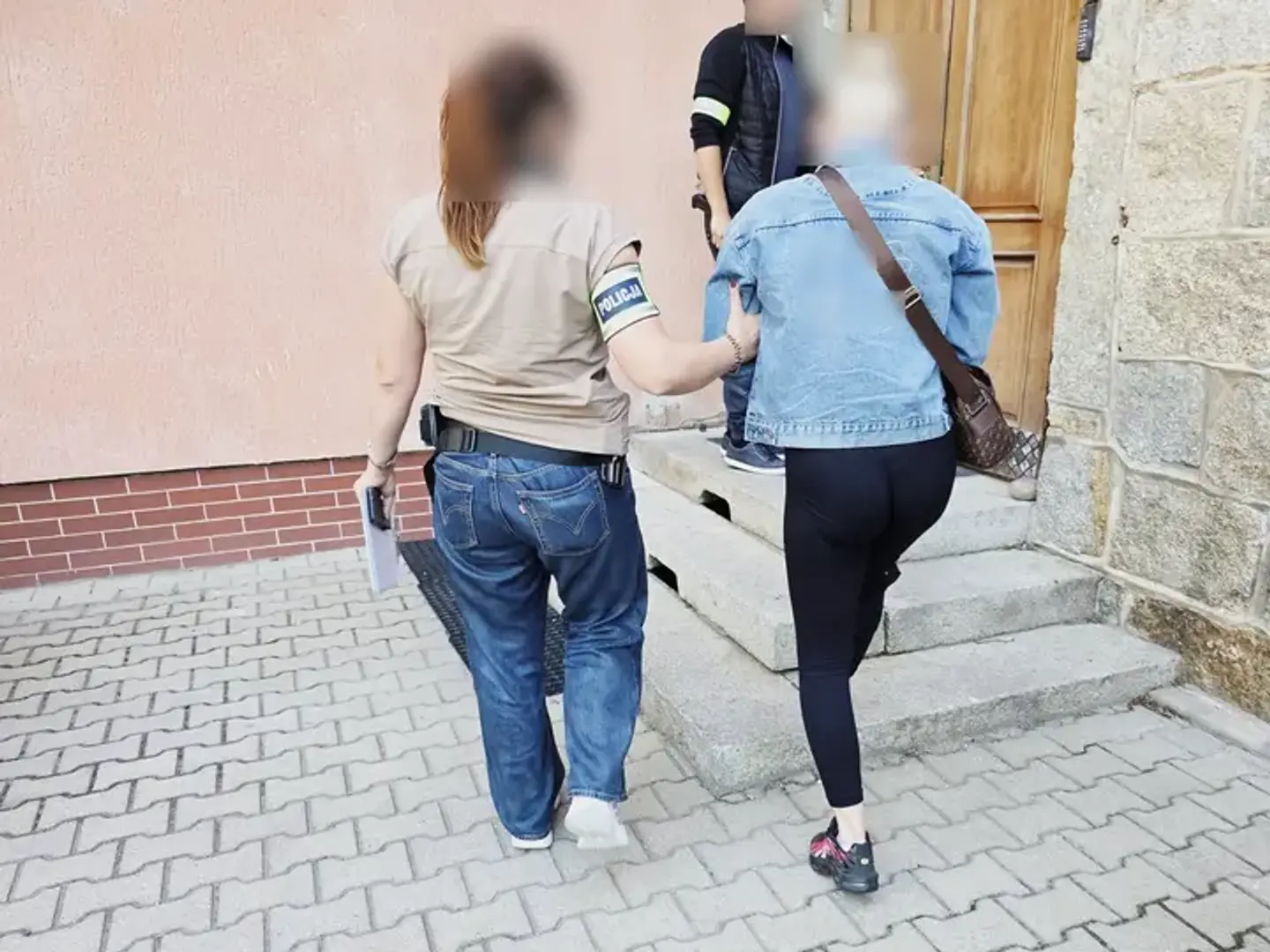
The woman emphasized that the local prosecutor’s office and the Ukrainian consulate in Poland are working directly with the family: “A criminal case has been opened. And as early as Monday, one of the children will testify in court. That’s why the prosecutor is in contact with us, and the child has already been summoned to court—in other words, communication is happening directly. We didn’t contact the consulate; the consulate reached out to us first: they got in touch literally the very next day and are keeping a close eye on the situation. As of today, the case is developing rapidly, so we’ll see how things unfold from here.”
Alina noted that she hadn’t encountered such cruelty before, although she could sense the tension in society. In her opinion, what adults convey at home plays a significant role in this.
Basically, I wouldn’t say that I, my family, or my acquaintances have directly encountered violence. Yes, the mood was such that it was clear: people in Poland aren’t very happy to have us here, but those were very isolated incidents. More often, these attitudes were brought from home. In other words, the adults would talk about it at home, the children would hear it, and the next day the adults would go out and interact and work normally with Ukrainians, while the children would bring those home discussions to school—discussions that shouldn’t have left the house. Well, other than that, there was no aggression.
Alina mother of Ukrainian women injured in an attack in Poland
Is everything really that bad?
Alongside the news of attacks, there’s another side to the story: millions of Ukrainians have been living in Poland for years without ever experiencing direct aggression. However, even they have recently begun to feel anxious—primarily because of anti-Ukrainian statements by Polish politicians.
Sofia, a Ukrainian woman who has been living in Poland for eight years, shared her experience with “Shelter.” She says that in all that time, she has never once encountered personal xenophobia or been insulted behind her back.
Most of the people around me were Poles who never had a problem with the fact that I’m Ukrainian. On the contrary, we often discussed our cultural differences and similarities. I’ve never once heard anyone say that I’m a bad person just because I’m Ukrainian
Sofia a Ukrainian woman who has been living in Poland for 8 years
In her opinion, some Poles form their views of foreigners not through personal experience, but under the influence of television, which often broadcasts negative narratives about migrants. However, in real life, openly anti-Ukrainian events seem to be more of a fringe phenomenon and lack widespread support.
“Recently, when I was in Lublin, there was some kind of parade against Ukrainians, where people were shouting, ‘A Ukrainian woman will never be my sister, a Ukrainian man will never be my brother.’ But in reality, this parade consisted of just three eccentric people and passersby nearby who didn’t understand what was going on—they were laughing and filming it on their phones. When I told my Polish friends about this, they said they were ashamed that such Poles exist,” Sofia recalls.
However, despite having no personal negative experiences, she has felt less safe over the past year and a half to two years. She attributes this mainly to the way events are covered in the media and on social media, where news is presented without context and creates an atmosphere of constant anxiety.
There used to be xenophobia and nationalism, too, but it just wasn’t covered the same way, and different narratives were being pushed on society. Now, the situation looks different. I think this phase in Polish-Ukrainian relations will end when it ceases to be in anyone’s interest. I’ve stopped feeling safe because, no matter where you go, every news story is about someone being beaten up just because they’re Ukrainian—without any context. Or about how someone was deported simply because they’re Ukrainian. Because of this, people are afraid and simply live in constant anxiety.
Sofia a Ukrainian woman who has been living in Poland for 8 years
Vasyl Bodnar, Ukraine’s ambassador to Poland, responding to the latest incidents, expressed hope that this is “a temporary phenomenon and it will pass.” In his view, the recent attacks on Ukrainians in Poland “are not a trend, but merely isolated incidents.”
“In this situation, where the issue has gained political attention and focus on Ukraine has intensified, it’s obvious that the media and politicians are devoting quite a lot of attention to this,” Bodnar noted.
Who Is Actually Sowing Discord?
Polish government spokesperson Adam Szlapka linked the rise in attacks on Ukrainians to the rhetoric and actions of right-wing politicians. He acknowledged that some politicians are increasingly resorting to rhetoric similar to that of Grzegorz Braun—a pro-Russian figure with far-right nationalist views.
Polish Prime Minister Donald Tusk, commenting on the beating of Ukrainians in Wrocław, called on President Karol Nawrocki to stop remaining silent about the incidents.
“Poland’s good reputation is being destroyed by politically obsessed criminals, and anyone who beats Ukrainian women on the street contributes to spreading the worst stereotypes about Poland and supports the Bandera followers,” Tusk said.
This year’s escalation in Polish-Ukrainian relations also played a role. According to the results of a recent IBRiS poll, one-third of Poles’ attitudes toward Ukrainians have worsened following President Volodymyr Zelenskyy’s decision to bestow the honorary title “Heroes of the UPA” on one of the units of the Special Operations Forces.
Foreign Ministry spokesperson Heorhiy Tykhyi said in an interview with “Shelter” that Ukraine advocates for equality and mutual respect in its relations with Poland, and that the difficult chapters of our shared history—particularly the Volhynia tragedy—should not be denied or ignored.
“But when certain politicians start using this issue simply to stoke electoral sentiment—well, excuse me, that’s something else entirely. This is no longer about finding a solution. It’s about finding pretexts for present-day hatred in the past. That is what we condemn, because this hatred then spills over into incidents like the ones that occurred recently in Wrocław or before that,” he said.
However, Tykhyi emphasized that the response of Polish law enforcement to these crimes is prompt and fair: “As for these people: A—they’re being detained; B—a series of public statements do, after all, condemn these actions and condemn xenophobia. In other words, we are grateful to the Polish law enforcement agencies that respond to these incidents, but unfortunately, the number of incidents is increasing. And now the school year is about to begin, and children will go to school, where various kinds of incidents will also occur.”
According to him, some Polish politicians do not understand that their rhetoric is turning into actual physical violence.
“So they simply need to stop; they should earn political capital on other issues, not by stoking hatred toward Ukrainians,”
Heorhiy Tykhyi Spokesperson for the Ukrainian Ministry of Foreign Affairs
Thus, the surge in xenophobia in Poland does not mean that Polish society is entirely hostile toward Ukrainians. On the one hand, statistics and high-profile incidents do indeed show a rise in tension, which is actively fueled by right-wing politicians. On the other hand, the Polish law enforcement system is responding to these crimes, and the majority of Poles remain friendly toward Ukrainians.
Author

Ewa Slastnova journalist
All materialsShe studied at the School of Journalism at the Boris Grinchenko Kyiv Metropolitan University, majoring in "International Journalism." She worked at NV for three years.