The Ostroh Bible on Mount Athos: A researcher has discovered three previously unknown copies
/1440x1080/filters:format(webp)/p/3/43/cd6283db2ec0424f4af6bcd6f6363433.webp "Greece")
/88x88/filters:format(webp)/p/8/dd/873b2572e52a14be2952409d3d859dd8.webp)
news feed editor
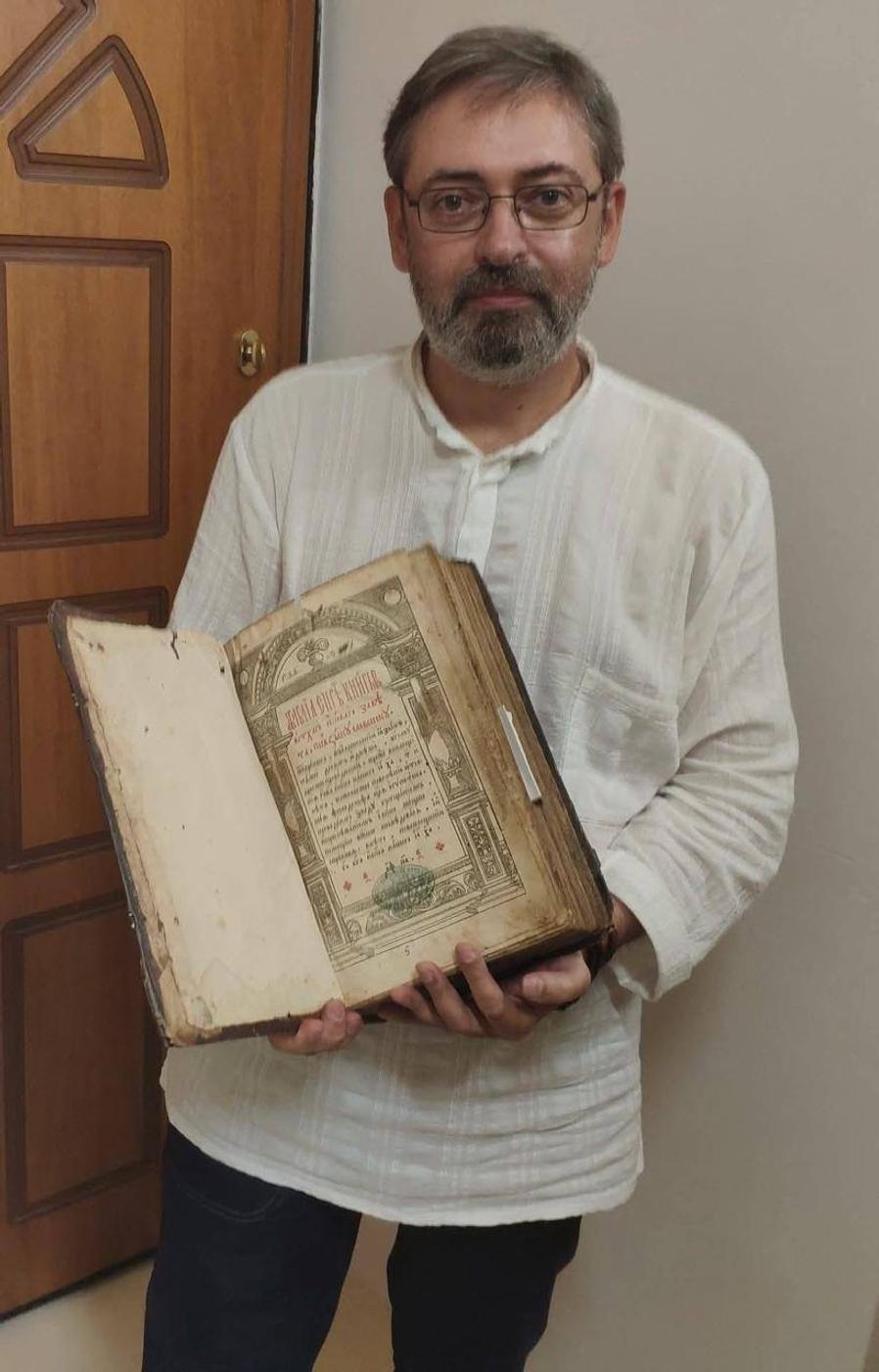
On Mount Athos in Greece, researcher Serhiy Shumylo discovered three previously unknown copies of the Ostroh Bible, printed in 1581. The discovery expanded the list of Ukrainian early printed books preserved worldwide and attested to Ukraine’s long-standing spiritual and cultural ties with the monasteries of Mount Athos.
Historian Serhiy Shumylo reported this on Facebook.
Ukrainian early printed books have been preserved far from their homeland
August marked the 445th anniversary of the first edition of the Ostroh Bible—a complete collection of the Holy Scriptures in Church Slavonic, printed in 1581 in Ostroh.
The 1,256-page edition has become one of the most significant monuments of Ukraine’s spiritual and cultural heritage of the 16th century.
While researching monastic libraries on Mount Athos in Greece, historian Serhiy Shumylo discovered three previously unknown copies of the Ostroh Bible.
According to his data, there are currently about 350 such books known worldwide, so the new discoveries have expanded the list of surviving copies.
The books may have been of Ukrainian origin
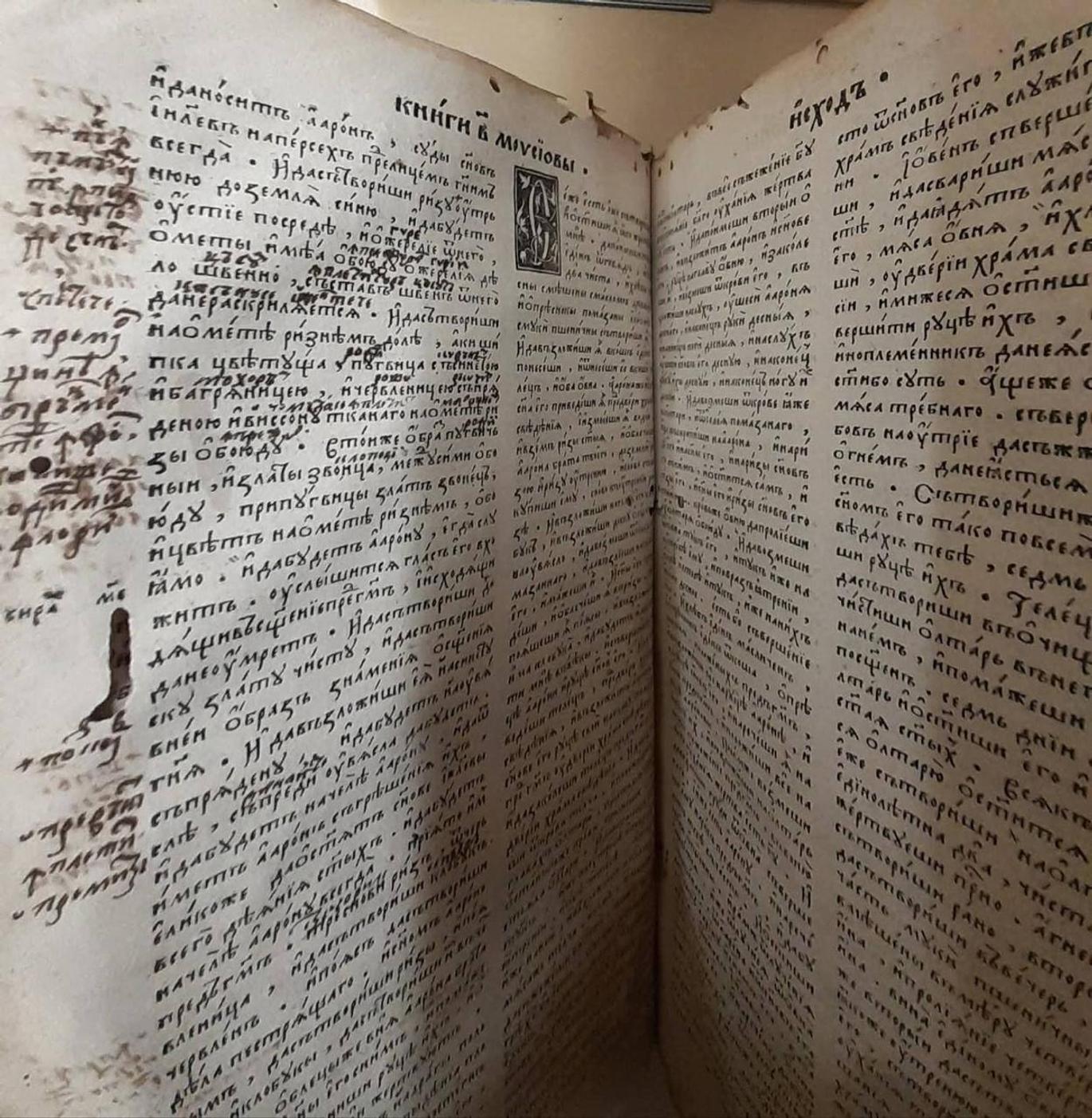
The researcher determined the origin of the Mount Athos copies, in particular, based on marginalia—handwritten notes on the pages of the early printed books.
One of the copies, he suggests, may have been associated with the Venerable Ivan Vyshensky, who resided on Mount Athos in the late 16th–early 17th centuries.
Another Ostroh edition from 1595 in the same collection preserves a dedicatory inscription by Vasyl Surazky to Vyshensky.
Yet another copy is believed to have come from the Nyamets Monastery in Romania, where it was used by the disciples of the Venerable Paisius Velichkovsky. Another Ostroh Bible was associated with Hieromonk Callistus Menovsky.
A marginal note indicates that in 1754 it was transferred from the Poltava Regiment to the Ukrainian Cossack hermitage “Chornyi Vir” on Mount Athos.
Hundreds of Ukrainian early printed books were found on Mount Athos
In total, Shumylo counted 32 Cyrillic incunabula from the 16th–17th centuries, published in the Kyiv Metropolis, and 143 Ukrainian incunabula from the 18th century in the collection of one of the Mount Athos monasteries.
According to him, a significant portion of the books belonged to the library of the “Chornyi Vir” hermitage, which in the 18th century was associated with Ukrainian Cossack monks.
Some of the publications may have reached Mount Athos directly from Ostroh via Prince Vasyl-Kostyantyn Ostrozky, who maintained ties with Mount Athos.
The researcher emphasized that the discovered books attest to the long-standing spiritual and cultural ties between the Kyiv Metropolis, the Ukrainian Cossacks, and the Cossack leadership with the monasteries of Mount Athos.
The research was made possible with the support of the Leibniz Institute for the History and Culture of Eastern Europe and the Gerda Henkel Foundation.
Important Dates
The year 2026 will also mark the 500th anniversary of the birth of Vasyl-Kostyantyn Ostrozky and the 450th anniversary of the founding of the Ostroh Academy.
As a reminder, the Russian Ministry of Education has updated its list of recommended educational materials and included the textbook “History of Our Region: Donbas and Novorossiya.” The publication is intended for students in grades 5–7, and its use in Russian schools is scheduled to begin with the new school year.
Author

Anastasia Nykonchuk news feed editor
All materialsShe studied at the I. Ya. Franko Zhytomyr State University, majoring in “Publishing, Editing, and the Fundamentals of Journalism,” as well as at the National Aviation University, majoring in “Journalism.”
She has been working in journalism since the early 2010s. She has worked for the publications “Haser,” “Stina,” “Cursor,” and “RBC-Ukraine.”