The main alternative to Patriot: Will the upgraded SAMP/T system solve the ballistic threat in Ukraine?
/88x88/filters:format(webp)/p/5/70/6511266e5e5822a9f31e393ff56d0705.webp "Yeva Slastnova")
journalist
/2368x/filters:format(webp)/p/f/65/b0bbf37b8dced5456a7ccd3f8f23d65f.webp)
Ukraine is set to be the first country in the world to receive modernized French-Italian SAMP/T NG air defense systems, which could become the primary alternative to the American Patriot systems.
"Shelter" asked experts about the capabilities of the SAMP/T NG: whether it is capable of shooting down Russian ballistic missiles, what its strengths and weaknesses are, and whether it would be suitable for Ukraine.
What is known about the transfer of SAMP/T NG systems to Ukraine?
Last December, the military aid analyst at French Aid to Ukraine was the first to report that France would transfer modernized SAMP/T NG systems to Ukraine in 2026.
At the time, the analyst emphasized that the SAMP/T NG would become “the most powerful air defense system” in Ukraine.
Currently, Kyiv is in dire need of an alternative to the American Patriot air defense systems. Ukraine is critically short of PAC-2 and PAC-3 missiles, and the escalation in the Middle East has only exacerbated the global shortage of these interceptors.
The “French Aid to Ukraine” post did not specify how many upgraded systems would be transferred to Ukraine. However, the military portal “Military” reported on eight SAMP/T NG systems, each of which will include six launchers.
The Ukrainian military is already using the previous generation of SAMP/T—France and Italy transferred the first battery back in 2023. The system performed well against Russian cruise missiles but had difficulties intercepting ballistic missiles.
The NG version is intended to address this shortcoming. Mass production of the upgraded system began only in 2026. President Volodymyr Zelenskyi stated that Ukraine will be the first to receive and test the new, enhanced air defense systems. He also said that the SAMP/T NG represents a new generation of European systems, comparable to the Patriot.
According to Defense Express, the upgraded air defense system will be more effective against ballistic missiles primarily due to the new Ground Fire 300 radar. It will replace the Arabel radar and expand the system’s capabilities: the detection range will increase from 80 to 400 km, and the number of targets it can track simultaneously will rise from 130 to 1,000.
Pros and Cons of the Upgraded SAMP/T
The European consortium Eurosam—a joint venture between defense giants Thales and the French and Italian divisions of MBDA—is responsible for developing the SAMP/T.
The modernized SAMP/T NG system differs significantly from previous versions but has its own technical features.
Aviation expert Kostyantyn Kryvolap told “Shelter” that the SAMP/T NG air defense system features a significantly improved command-and-control system, faster and longer-range missiles, and upgraded radars.
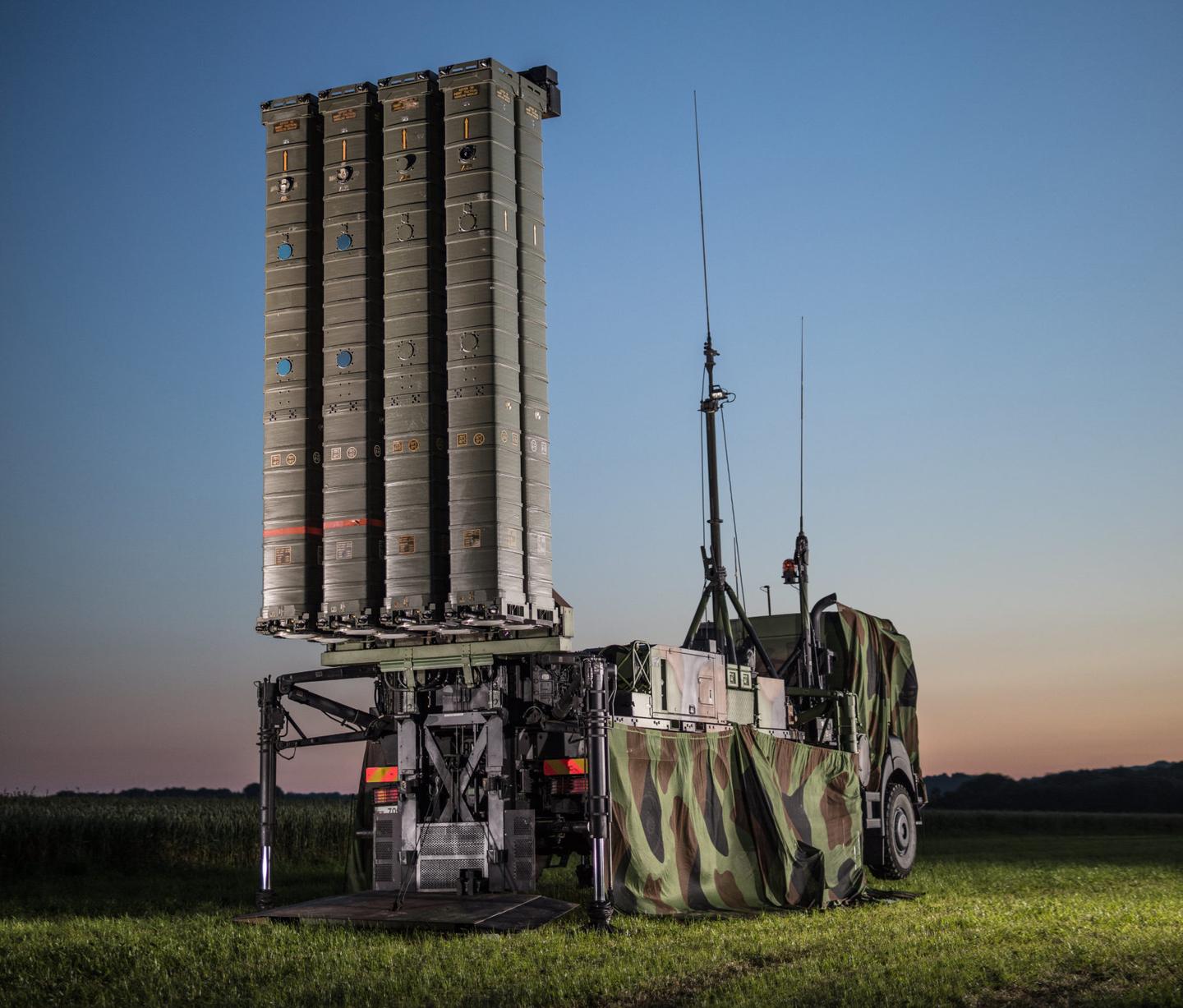
He emphasized that MBDA’s tests in December confirmed the system’s effectiveness against ballistic missiles. However, the expert considers one aspect to be controversial:
"One of these, in my opinion, not-so-successful features is that MBDA did not opt for hit-to-kill technology (i.e., direct kinetic destruction of a ballistic missile). It seems they opted for a warhead that, upon coming very close to a ballistic missile, explodes into heavy fragments. Not a typical cloud of debris, as in Russian missiles, but rather, the Aster 30 system produces a highly concentrated jet of debris, as opposed to a direct kinetic strike like hit-to-kill," the aviation expert noted.
Aviation expert and reserve officer of the Ukrainian Air Force Anatoliy Khrapchynskyi told “Shelter” that the SAMP/T NG is a promising system. Comparing it to the Patriot, he highlighted some fundamental differences:
The SAMP/T system’s radar provides 360-degree coverage. The Patriot’s radar operates in sectors. While the Patriot system uses a vertical missile launch—meaning the launcher does not need to be aimed at the target area—the SAMP/T system employs a directed-action mechanism: the launcher is positioned at an angle, and the missile is launched toward the threat. In other words, the launcher has to be repositioned, and that takes time
Anatoliy Khrapchynskyiaviation expert and reserve officer of the Ukrainian Air Force
/88x88/filters:format(webp)/p/f/a5/6604bb97fb17e3d6282e0b218731ba5f.webp)
At the same time, Khrapchynskyi noted that if Ukraine were to actively deploy this system in the same way as the Patriot, it would enable rapid development and practical improvements in capabilities.
Potential production of Aster missiles in Ukraine
As for missile systems, it is the latest Aster 30 B1NT missiles that are expected to unlock the full potential of the SAMP/T NG. As reported by the Italian newspaper La Repubblica in late August, Rome and Paris will grant Ukraine permission to manufacture them.
However, the SAMP/T NG is also compatible with the standard Aster 30 missiles. Italy intends to transfer some of these missiles from its own arsenals to Kyiv as early as October. France, for its part, has promised to grant licenses for their production. But in practice, this process has many pitfalls.
Kostyantyn Kryvolap explained that the launcher is suitable for both the standard Aster 30 and the upgraded Aster 30 B1NT, which have additional engines and can withstand maneuvers involving high g-forces. At the start of the full-scale war, it took up to 48 months to assemble a single missile, and only later was this timeframe reduced to 18 months.
According to the expert, Ukraine will not immediately begin full-scale production of these missiles because they have a complex component base.
Initially, it will involve assembling the missile from components. We will produce the individual elements that we are capable of making—machined parts and individual assemblies. The most important thing is that the staff must understand how this missile works, how to test it, monitor the processes, and ensure quality
Konstantin Kryvolapaviation expert
/88x88/filters:format(webp)/p/a/fe/c7940444029728b5c30110dcc1fd0fea.webp)
Anatoliy Khrapchynskyi also noted that current rocket production volumes amount to only about 300 units per year. Moreover, the license alone does not solve the problem without machine tools, assembly lines, and staff training.
“The Aster missile has a solid-fuel engine. That means it’s a complex system to assemble. If we’re talking, for example, about space rockets, which use conventional jet engines, then we have experience—after all, we produce the ‘Neptune,’ so to speak. The question here is whether we’ll be able to manufacture certain individual components,” he emphasized.
The officer added that scaling up production is also hampered by the reluctance of European politicians to take responsibility.
In other words, the issue is increasing the production of missiles and interceptors—such as the Aster 30 B1NT—which would create more jobs. And then the war will end—and what will we do? No European politician will want to take responsibility for putting the economy on a military footing
Anatoliy Khrapchynskyiaviation expert and officer of the Ukrainian Air Force
Can SAMP/T solve the problem of ballistic missile strikes?
Ukraine’s need for protection against Russian ballistic missiles is critical, but should SAMP/T NG be viewed as a full-fledged replacement for the Patriot system?
Kostyantyn Kryvolap believes that this is by no means the only means of defense, and the problem must be addressed in a much broader context.
After all, when it comes to ballistic missiles, it’s not enough just to shoot them down—we must also destroy the launchers: the OTRK systems moving into position, as well as the KN-23 launchers themselves. We must destroy production facilities—missile plants, instrument-making factories, or enterprises where rocket engines are manufactured. It is enough that we are gaining capabilities, which we are utilizing and will continue to work with
Konstantin Kryvolapaviation expert
Anatoliy Khrapchynskyi emphasized that Ukraine currently needs to take two consecutive steps: promptly equipping existing systems with interceptor missiles and developing a strategic vision for its own missile defense.
The expert cites the example of Germany, which acquired the Israeli Arrow system, which intercepts ballistic missiles at their apogee, before they even reach their target.
For Ukraine, he says, the strategic solution is to create an independent capability—either by deploying its own system or through close cooperation with European partners.
That is why he considers the future Freya system to be the most promising step.
It is the most promising because it integrates European countries into a single system—the European defense industry into a single system—which will help develop solutions that allow us to act together with Europe and counter any threats
Anatoliy Khrapchynskyiaviation expert and officer of the Ukrainian Air Force
In addition, Khrapchynskyi cautioned that the issues of strengthening air defense and scaling up production must be constantly communicated to Western partners.
"That’s why we really need to push Europe on this and explain to them: ‘Listen, this hasn’t sunk in yet, but later it will be too late.’"
Author

Yeva Slastnova journalist
All materialsShe studied at the School of Journalism at the Boris Grinchenko Kyiv Metropolitan University, majoring in "International Journalism." She worked at NV for three years.